
Ingredient file // Fruit or vegetable
Pumpkin Puree
A dilute fiber that sells better than it works
Pumpkin puree is cooked, mashed pumpkin or golden squash, and it is about 90% water. In a wet food it adds moisture, a little fiber and some beta carotene. Tufts nutritionists say its small amount and type of fiber usually limit any effect on stool.
Role in the food Does a job- What it is
- Cooked, mashed flesh of processing pumpkins or golden squash, with rind and seeds removed, mostly water.
- Made from
- Dickinson-type pumpkins and golden-fleshed sweet squash
- Main job
- Moisture plus a little fiber
- Typical amount
- Not published
- Watch for
- Pie filling or salted pumpkin when adding it at home
- Not the same as
- Pumpkin seed or pumpkin pie mix
Straight answer
Is Pumpkin Puree safe for dogs?
Count it as moisture, not medicine
In a wet food, pumpkin usually sits behind the meat and broth, among the other vegetables. That is the right place for it, but it tells you little about the food. Judge the recipe on its protein and fat. If your dog needs fiber for its stools, ask your vet about psyllium rather than more pumpkin.
- Why it is in the food
- Moisture plus a little fiber
- How common
- Listed by 1 of the 3,204 foods we track
Our read // In our catalog
In 1 of every 3,204 foods we track
Share of foods that list it
<1%
1 of the 3,204 foods with an ingredient list on file, from 1 brand. All wet dog food.
Each square is 1% of the catalog
Where it sits on the label
Median position 9. In the top five of 0 foods, so it is usually a supporting ingredient.
Above the salt
Almost always listed before the salt, so there is more of it than a pinch.
Who leans on it
100%
of the foods that list it are from NutriSource. 1 brand use it in total.
What it is
How it is made
Canned pumpkin is a staple human food, not a leftover. Illinois grows more than 95% of US processing pumpkins, and FDA lets canners use golden squash, or blends with it, under the pumpkin name.3,4,5
- 01 // Source Processing pumpkins Tough, tan Dickinson pumpkins, harvested by machine starting as early as August, mostly in central Illinois.
- 02 // Process Cleaned and quartered A tumbler strips off vines and leaves. Workers check the quartered fruit for ripeness and flaws.
- 03 // Process Softened and mashed The pieces are softened and mashed smooth, and a press removes excess water. A grinder takes out the rind and seeds.
- 04 // Output Canned puree The puree is sealed in cans and cooked. It stays shelf-stable for up to 24 months without preservatives.
What is in it
Composition, dry matter
29
% fiber
This is the total dietary fiber once the water is gone. Straight from the can the puree is 90% water, so a spoonful holds very little fiber.
Why it is in the bag
Mainly there for moisture and texture
- Main nutrition
- Supporting nutrient
- Does a job
- Mostly filler
Its clearest job is moisture and body: canned puree is 90% water. Labels rank ingredients by weight as added, water included, so a watery puree ranks higher than its dry contribution. Its fiber, 2.9 g per 100 g as fed, depends on the amount used: likely minor at a few percent of a recipe, measurable at higher inclusion. Without a published inclusion level, the label cannot tell you which.1,10
-
01
Moisture and body
Puree is 90% water with soft carbohydrate. It adds moisture and a thick texture to wet food and stews while bringing almost no fat.1
-
02
A little fiber and sugar
Each 100 g as fed brings 2.9 g of fiber, 3.3 g of sugars and 34 kcal. That is a real contribution but a small one, too small to move a food's fiber figure much.1
-
03
Steady, shelf-stable supply
Machine harvest in Illinois feeds large canning plants, and the canned puree keeps up to 24 months. Supply does not depend on the season.4,5
How much No recipe share is published. The amounts on record are what owners add at home, 1/4 teaspoon to 2 tablespoons per meal.2
Our read // The claims
What the evidence supports
Strong: controlled studies in dogs agree. Some: small or mixed dog data. Thin: mechanism or lab work only. None: nothing, or the evidence points the other way.
-
Critics say
Canned pumpkin is really squash
Evidence
- Strong
- Some
- Thin
- None
This is true and legal. FDA has long let canners sell golden-fleshed sweet squash, or blends of squash and field pumpkin, as pumpkin. Both are orange squash flesh, so the issue is the label, not the quality.3
-
Brands say
Pumpkin's beta carotene boosts the immune system
Outruns the evidence
Evidence
- Strong
- Some
- Thin
- None
An 8-week beagle trial fed 2, 20 or 50 mg a day. Supplemented dogs had higher IgG and skin-test responses, not broken out by dose. CD4 cells rose at 20 and 50 mg; 20 mg is about 290 g of canned pumpkin. It measured markers, not illness.1,8
-
Owners say
Pumpkin firms up a dog's loose stools
Outruns the evidence
Evidence
- Strong
- Some
- Thin
- None
We found no controlled trial feeding pumpkin to dogs with diarrhea. The idea borrows from psyllium, where an uncontrolled 22-dog study saw 90% reach consistent stools on 4 tablespoons a day. Tufts says pumpkin's small amount and type of fiber usually limit its effect.2,9
-
Owners say
A spoonful of pumpkin adds plenty of fiber
Outruns the evidence
Evidence
- Strong
- Some
- Thin
- None
Canned pumpkin is 2.9% fiber as fed. Tufts nutritionist Lisa Freeman calculates that a medium-sized dog would need nearly 12 cups a day to match the fiber in one high-fiber therapeutic diet. A spoonful is a token amount.1,2
Straight answers
What owners ask
-
Q01
Is it just filler?
Mostly notIt has a job in a wet food: it adds moisture, texture, a little fiber and some beta carotene. It is too dilute to do more than that, so count it as a minor vegetable, not a reason to buy.1
-
Q02
Is pumpkin pie mix the same thing?
NoPie mix is sweetened. Tufts puts it at up to 281 calories a cup, against 83 for plain pumpkin. For home use, buy cans labeled 100% pumpkin with no salt added.2
Who uses it
Brands, best sellers and the company it keeps
Top brands, by foods that list it
Foods that list it / all the brand's recipes we track.
Usually listed with, share of the foods that list it
- Turkey 100%
- Turkey Broth 100%
- Turkey Liver 100%
- Carrots 100%
- Tapioca Starch 100%
- Green Beans 100%
- Quinoa 100%
- Pearled Barley 100%
- Spinach 100%
On the shelf
Foods that list Pumpkin Puree
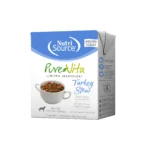
1 food in our catalog lists it, highest on the label first.
Sources
What we read
Checked October 1, 2026.
- 1 Pumpkin, canned, without salt (FDC ID 168450)
- 2 People Like Giving Pets Pumpkin, But Is It Good for Them?
- 3 CPG Sec 585.725 "Pumpkin" - Labeling Articles Made from Certain Varieties of Squash
- 4 This is how Libby's canned pumpkin puree is made
- 5 Interesting facts about fall standard pumpkins
- 6 Nutritional and functional potential of pumpkin (Cucurbita moschata) pulp and pequi (Caryocar brasiliense Camb.) peel flours
- 7 Carotenoid Content and Profiles of Pumpkin Products and By-Products
- 8 Dietary beta-carotene stimulates cell-mediated and humoral immune response in dogs
- 9 The use of soluble fibre for the management of chronic idiopathic large-bowel diarrhoea in police working dogs
- 10 Pet food labels: Cracking the code (Proceedings)