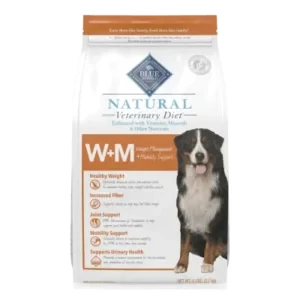
Natural Veterinary Diet is built around purpose: each recipe is named for a target such as kidney support, food intolerance, digestive support, or weight management paired with urinary care or mobility. Chicken appears in 6 of 8 kibbles and fish in 4, while NP uses alligator and HF uses salmon hydrolysate. All 12 recipes list potato, and 10 include peas or lentils.
The kibbles vary widely. Protein runs from 14% in KS Kidney Support to 30% in the three weight recipes, and estimated starch from 24% to 48%, all as fed. The kibble average of 24.8% protein sits a little under the catalog kibble average of 26.9%, starch averages 37%, close to the catalog's 37.4%, and calories average 345 kcal per cup against 395. The three wet foods carry 7% to 8% protein, under the catalog wet average of 8.3%, and the KS topper has 4%, far below the 18.4% topper average.
The trade-offs: legumes appear in most recipes, and the Grain-Free names are not a reliable guide, since our ingredient read flags grain in three of those kibbles. The two Weight Management + Mobility listings also share identical figures and first ingredients.
A GOOD FIT FOR
Owners wanting kibble averaging 345 kcal per cup, below catalog average
Owners seeking alligator or hydrolyzed salmon as the main protein
Owners after high-fiber kibble, with 17% fiber in weight recipes
WORTH KNOWING
10 of 12 recipes include peas or lentils, and all 12 list potato.
Our ingredient read flags grain in three kibbles named Grain-Free: KS Kidney Support, W+U and GI Low Fat.
Kibble estimated starch spans 24% to 48%, so recipes in the line differ a lot.
All figures as fed, from the guaranteed analysis on each label. Starch is our estimate, since no bag prints it. Highest in the line is marked in bold, lowest in italics.
This listing matches W+M exactly, with deboned salmon, chicken meal and barley up front, 30% protein, 17% fiber and 24% estimated starch, but it is the only recipe with no life stage listed. It is made for weight management and mobility and suits owners seeking a pea-free kibble.
W+U is the only kibble with turkey and pairs 30% protein with 10% fat, less fat than the other two weight recipes, at 314 kcal per cup. Made for weight management and urinary care, it suits owners comfortable with pea starch, peas and pea protein near the top.
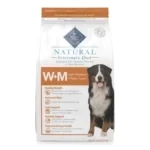
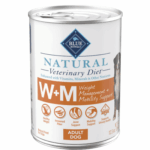
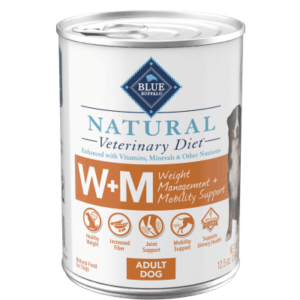
W+M is listed for adult dogs and shares its figures with the Weight Management + Mobility Support listing: 30% protein, 13% fat, 17% fiber and 24% estimated starch, tied for lowest in the line. Owners who prefer barley and salmon over peas and lentils may look here.
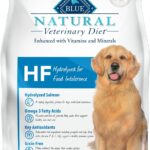
HF is the only kibble built on salmon hydrolysate, with fish as its sole animal protein, followed by pea starch, potatoes, peas and pea protein. Sold for food intolerance, at 24% protein and 43% estimated starch it suits owners looking specifically for a hydrolyzed fish kibble.
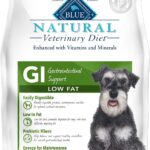
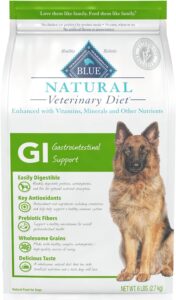
GI Gastrointestinal Support is the only kibble with oatmeal and brown rice in its first ingredients, after deboned chicken and chicken meal. With 24% protein, 12% fat and 344 kcal per cup, it suits owners wanting a grain-inclusive recipe sold for digestive support.
Least fat in the lineMost starch in the lineFewest calories in the line
GI Low Fat leads with deboned whitefish and has the least fat of the kibbles at 6%, the most estimated starch at 48% and the fewest calories at 297 kcal per cup. It suits owners wanting the lowest-fat kibble here, with tapioca starch and potatoes among its first ingredients.
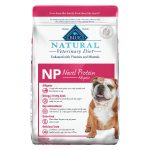
NP is the only recipe built on alligator, with deboned alligator and alligator meal and no chicken, fish or egg in its protein list. With peas, pea starch and pea protein in its first five ingredients and 22% protein, it suits owners seeking a novel protein kibble without grain.
Least protein in the lineMost fat in the lineMost calories in the line
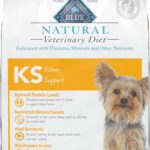
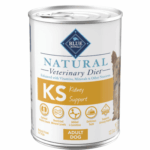
KS Kidney Support has the least protein of the kibbles at 14% and the most fat at 18%, and at 404 kcal per cup it is the most calorie-dense kibble. It is made for kidney support and suits owners who want a low-protein chicken and egg recipe.
All figures as fed, from the guaranteed analysis on each label. Wet food is mostly water, so compare it with other wet food only. Highest in the line is marked in bold, lowest in italics.
Fewest calories in the lineOnly wet food here with egg
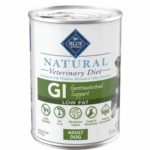
GI Low Fat has the least fat among wet foods at 1.5% and the fewest calories at 292 kcal per can, and it is the only wet recipe with egg. It shares the GI label with the gastrointestinal support kibbles and suits owners wanting a lower-fat wet food.
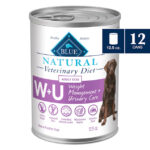
Of the three wet foods, WU is the only one that leads with chicken and chicken liver rather than whitefish, and it lists pea protein fifth. At 7% protein, 2.5% fat and 312 kcal per can, it suits owners who want a chicken-first wet food.
WM leads with whitefish and potatoes and carries the most calories of the wet foods at 373 kcal per can, with 5% fiber against 3% in GI Low Fat. It suits owners who want a fish-first wet food with more energy per can.
All figures as fed, from the guaranteed analysis on each label. Wet food is mostly water, so compare it with other wet food only. Highest in the line is marked in bold, lowest in italics.
The only topper in the line, KS lists chicken first, then chicken broth, water, potato starch and potatoes, with 4% protein and 3% fat as fed. It suits owners adding a chicken-based extra to a meal and shares the KS code with the Kidney Support kibble.
Not across the board. All three wet foods, the KS topper, and the HF and NP kibbles are grain free, while GI Gastrointestinal Support and both Weight Management + Mobility kibbles include grain. Our ingredient read also flags grain in KS Kidney Support, W+U and GI Low Fat despite Grain-Free in their names.
Which Blue Natural Veterinary Diet recipe has the most protein?
Among kibbles, W+U and both Weight Management + Mobility listings tie at 30% protein as fed. Among wet foods, GI Low Fat leads at 8%.
Does Blue Natural Veterinary Diet contain peas?
10 of 12 recipes include peas or lentils. Only the two Weight Management + Mobility kibbles, which list barley and potato protein instead, do not.
Ten everyday foods. Safe, In Moderation or Never. No googling, no second guesses.
Then share your score with your friends, however embarrassing it turns out to be.
115 foods in the deck. Grapes are in there. So is cheese.
Cheese?Avocado?Grapes?
Flashcards
Think You Know?
Ten foods, one at a time. Call each one Safe, In Moderation or Never, then flip
the card to see if you had it right. The ones you miss are listed at the end.
Card1/10
Right0
Streak0
Keys: 1 Safe 2 Moderation 3 Never Enter Next
SafeNever
Can dogs eat
0/10
Challenge a friend
Copied. Paste it anywhere your friends will see it.