
Ingredient file // Legume
Dried Green Peas
Plain field peas, green only in color
Dried green peas are mature field peas with green insides, harvested dry and ground for kibble. They give the extruder starch and add some plant protein, and they carry the same open heart question as any pea.
- What it is
- Mature, dry pea seeds of the green class, ground and cooked into kibble as a starch and protein source.
- Made from
- Smooth green dry field peas
- Main job
- Starch plus some protein
- Typical amount
- Not published; one dog trial fed about 42% pea flour
- Watch for
- Several pea ingredients stacked high in one list
- Not the same as
- Fresh or frozen garden peas
Straight answer
Is Dried Green Peas safe for dogs?
Count every pea line before judging the meat
Read dried green peas like any pea. Add up every pea line on the bag, including pea protein, pea starch and pea fiber, and ask where the total sits against the meat. One pea entry below the top ten is ordinary starch. For a dog diagnosed with DCM, Tufts cardiologists advise no pulses at all, so this food is out.
- Why it is in the food
- Starch plus some protein
- How common
- Listed by 4 of the 3,204 foods we track
Our read // In our catalog
In 1 of every 801 foods we track
Share of foods that list it
<1%
4 of the 3,204 foods with an ingredient list on file, from 2 brands. 3 dog food topper, 1 dry dog food.
Each square is 1% of the catalog
Where it sits on the label
Median position 7.5. In the top five of 1 food, so it is usually a supporting ingredient.
Above the salt
Almost always listed before the salt, so there is more of it than a pinch.
Price per lb
Median of the cheapest bag price across 4 priced foods, 420% above the catalog. The price is the food's, not the ingredient's.
Who leans on it
75%
of the foods that list it are from ZIWI. 2 brands use it in total.
What it is
How it is made
Green peas are one of the main dry pea classes, grown for human food and livestock feed. They are harvested dry like beans, so kibble makers only need to clean and grind them.1,10
- 01 // Source Green field peas Smooth peas with green insides, the second most grown pea class in Saskatchewan after yellow peas.
- 02 // Process Harvested on time A late harvest lets green peas bleach in the field, which downgrades them, so growers plant them first.
- 03 // Process Ground, hull on or off The hull is 7 to 14% of the seed. Removing it cuts fiber and raises protein and starch.
- 04 // Output Dried green peas Whole or ground peas of about 24% protein and 51% starch on a dry basis, ready for the extruder.
What is in it
Composition, dry matter
43-58
% starch
The starch range in dry peas. Half the seed is starch, which is why peas stand in for grain in a recipe, not for meat.
Why it is in the bag
What the manufacturer gets
-
01
Starch for the extruder
Kibble needs starch to expand and hold its shape. At about 51% starch on a dry basis, peas do that job without any grain.1
-
02
Plant protein on top
At about 24% protein, peas lift the crude protein figure. Methionine is only about 1% of that protein, so peas need a methionine-rich partner, such as animal protein.1,8
-
03
Steadier glucose, in some diets
In a 15-dog crossover, diabetic dogs on a pea and barley diet had lower mean glucose than on a maize diet with the same insulin dose.7
-
04
Supply and demand
Peas are the pet food industry's dominant legume. They appeared in 18% of new US pet food launches between 2020 and 2024.11
How much Dog trials have fed smooth pea flour at about 42% of a diet for 7 days, and whole pulses up to 45% for 20 weeks.5,6
Our read // The claims
What the evidence supports
Strong: controlled studies in dogs agree. Some: small or mixed dog data. Thin: mechanism or lab work only. None: nothing, or the evidence points the other way.
-
Critics say
Peas boost the protein number without adding meat
Evidence
- Strong
- Some
- Thin
- None
Crude protein counts protein from any source. Peas run about 24% protein on a dry basis, with methionine at only about 1% of that protein, so the label figure rises without meat's amino acid profile.1,8
-
Brands say
Peas are a good plant protein for dogs
Evidence
- Strong
- Some
- Thin
- None
In a rooster assay used for pet food ingredients, pulse amino acids other than methionine were 80 to 90% digestible. Methionine limits them for dogs, so peas need a methionine-rich partner, such as animal protein.8
-
Brands say
Low glycemic, slow-release energy
Outruns the evidence
Evidence
- Strong
- Some
- Thin
- None
In 15 diabetic dogs, a pea and barley diet gave lower mean glucose than maize. In 8 healthy beagles, a smooth pea diet's glucose peak did not differ from rice. No benefit is shown for healthy dogs.6,7
-
Vets say
Peas cause heart disease in dogs
Outruns the evidence
Evidence
- Strong
- Some
- Thin
- None
FDA found peas or lentils in 93% of reported DCM diets but says reports cannot show cause. A 20-week, 28-dog trial at up to 45% pulses saw no heart changes. A 28-day trial saw subtle changes on wrinkled peas, a different class.2,4,5
-
Critics say
Peas are just filler
Outruns the evidence
Evidence
- Strong
- Some
- Thin
- None
Peas supply starch and protein the dog uses, which is a job. In an 8-dog trial, smooth pea protein digested at about 81% versus 84% for rice, a difference the study found not significant.1,6
Straight answers
What owners ask
-
Q01
Is it just filler?
NoPeas bring about half their dry weight as starch and a quarter as protein, and the dog uses both. Their protein digests about as well as rice's, with no significant difference found in one trial.1,6
-
Q02
Are green peas different from yellow peas?
BarelyThe classes differ in seed color and in how carefully green peas must be harvested to avoid bleaching. Feed tables treat them as one ingredient, and no dog study compares the two.1,10
-
Q03
Should I avoid peas because of DCM?
Not by defaultFor a healthy dog the cause is unknown and the trials disagree. Tufts cardiologists flag pulses in the top 10 ingredients, or several pulses anywhere in the list, as the pattern that may put some dogs at risk.2,3
-
Q04
Will peas give my dog gas?
Some dogsPeas carry about 2.3 to 6.3% of these sugars on a dry basis. Animals lack the enzyme to digest them, so colon bacteria ferment them into gas. No dog trial has measured it.9
Who uses it
Brands, best sellers and the company it keeps
Top brands, by foods that list it
Foods that list it / all the brand's recipes we track.
Usually listed with, share of the foods that list it
- Chicken 50%
- Chicken Fat 50%
- Lamb 25%
- Lamb Lung 25%
- Lamb Tripe 25%
- Lamb Liver 25%
- Lamb Heart 25%
- Lamb Bone 25%
- Lamb Spleen 25%
- Beef 25%
- Beef Lung 25%
- Beef Tripe 25%
On the shelf
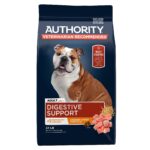
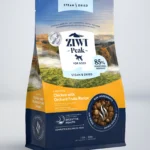
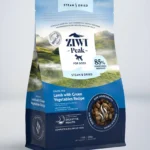
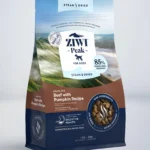
Foods that list Dried Green Peas
4 foods in our catalog list it, highest on the label first.
Sources
What we read
Checked October 24, 2026.
- 1 Pea seeds
- 2 FDA Investigation into Potential Link between Certain Diets and Canine Dilated Cardiomyopathy
- 3 Diet-associated dilated cardiomyopathy: the cause is not yet known but it hasn't gone away
- 4 Effects of a 28-day feeding trial of grain-containing versus pulse-based diets on cardiac function, taurine levels and digestibility in domestic dogs
- 5 The pulse of it: dietary inclusion of up to 45% whole pulse ingredients with chicken meal and pea starch in a complete and balanced diet does not affect cardiac function, fasted sulfur amino acid status, or other gross measures of health in adult dogs
- 6 The effects of 7 days of feeding pulse-based diets on digestibility, glycemic response and taurine levels in domestic dogs
- 7 Effects of pea with barley and less-processed maize on glycaemic control in diabetic dogs
- 8 Macronutrient composition, true metabolizable energy and amino acid digestibility, and indispensable amino acid scoring of pulse ingredients for use in canine and feline diets
- 9 Raffinose family oligosaccharides: friend or foe for human and plant health?
- 10 Pea Market Classes
- 11 Sustainability quickens demand for pulses