
Ingredient file // Plant protein
Hydrolyzed Soy Protein Isolate
A soy protein broken down for allergy diets
It is soy protein separated from the bean and cut by enzymes into small fragments. Allergic dogs' antibodies bind those fragments less, which is why allergy diets use it, though the response is lowered, not removed.
Role in the food Main nutrition- What it is
- Soy protein separated from the bean and cut by enzymes into small fragments that allergy antibodies bind less.
- Made from
- Defatted soybean flakes
- Main job
- Low-allergen protein for diet trials
- Typical amount
- About 23% of dry mix in one patent example
- Watch for
- Some soy-allergic dogs still react to it
- Not the same as
- Soybean meal or soy flour
Straight answer
Is Hydrolyzed Soy Protein Isolate safe for dogs?
Read it as a therapeutic protein, not filler
Near the top of a list, beside a plain starch such as pea starch, it marks a diet built for food-allergy or gut trials. Feed that food alone for the whole trial, since treats with other proteins spoil the test. In an everyday food it is simply a concentrated plant protein.
- Why it is in the food
- Low-allergen protein for diet trials
- How common
- Listed by 1 of the 3,204 foods we track
Our read // In our catalog
In 1 of every 3,204 foods we track
Share of foods that list it
<1%
1 of the 3,204 foods with an ingredient list on file, from 1 brand. All wet dog food.
Each square is 1% of the catalog
Where it sits on the label
Median position 4. In the top five of 1 food, so it is usually a main ingredient.
Above the salt
Almost always listed before the salt, so there is more of it than a pinch.
Who leans on it
100%
of the foods that list it are from Purina. 1 brand use it in total.
What it is
How it is made
Soybean crushers extract the oil and leave defatted flakes. Refiners separate the protein from the bean's carbohydrates, and protease enzymes cut soy protein into fragments small enough that allergy antibodies bind them less.6,8
- 01 // Source Defatted soy flakes What remains after soybean oil is extracted, still holding the bean's protein, fiber and sugars.
- 02 // Process Protein separated Raising the pH dissolves the protein, then centrifuging, precipitating, filtering and drying part it from the carbohydrates.
- 03 // Process Cut by enzymes Protease enzymes split soy proteins into peptides. The review describes this step on defatted flakes, not on finished isolate.
- 04 // Output Hydrolyzed soy granules Partially hydrolyzed soy protein. One Nestlé patent targets an average fragment size below 18 kD.
What is in it
Composition, dry matter
90
% protein
Crude protein in one analyzed soy protein isolate, measured before hydrolysis. Almost nothing else comes with it, so it is a protein ingredient only.
Why it is in the bag
The protein an allergy diet is built on
- Main nutrition
- Supporting nutrient
- Does a job
- Mostly filler
In a hydrolyzed allergy diet it is the main protein, not a minor extra. In one Nestlé patent formula the soy granules made up about 23% of the dry mix, with cornstarch as most of the rest. Soy protein isolate is about 90% protein on a dry basis. Makers hydrolyze it so allergy antibodies bind it less, and that lower binding is the reason the food exists.4,6,8
-
01
Hides soy from antibodies
Serum from soy-sensitized dogs showed 4 distinct allergen bands on native soy but only a diffuse pattern on the hydrolysate. IgE binding fell significantly.4
-
02
A test protein for diet trials
Elimination diets need a protein the immune system does not recognize. In a 14-dog allergy trial, a diet of hydrolyzed soy and cornstarch served as the test food.2
-
03
Nearly pure protein
Soy protein isolate is about 90% protein with almost no fiber, and it carried close to none of the raffinose and stachyose sugars found in whole soy.6
How much In a Nestlé patent example, partially hydrolyzed soy granules made up about 23% of the dry mix, with cornstarch as most of the rest.8
Our read // The claims
What the evidence supports
Strong: controlled studies in dogs agree. Some: small or mixed dog data. Thin: mechanism or lab work only. None: nothing, or the evidence points the other way.
-
Brands say
Soy protein is well digested by dogs
Evidence
- Strong
- Some
- Thin
- None
In one dog study cited in a 2023 review, unhydrolyzed soy protein isolate had about 89% crude protein digestibility, above the 77% and 85% reported for poultry meal and poultry by-product meal in separate studies. The hydrolyzed form was not tested.6
-
Brands say
Hydrolyzed soy won't set off a soy-allergic dog
Outruns the evidence
Evidence
- Strong
- Some
- Thin
- None
In 14 dogs with natural soy and corn allergy, itching rose significantly as a group after soy challenge but not on the hydrolyzed soy diet. Lab-sensitized beagles showed no oral reaction. A review still found up to 50% of allergic dogs flared on partial hydrolysates.1,2,3
-
Vets say
Hydrolyzed diets settle chronic gut disease
Evidence
- Strong
- Some
- Thin
- None
In a randomized 26-dog trial, more dogs on a hydrolyzed diet stayed free of signs at the second and third checkups than dogs on a digestible control. The abstract does not name the protein, so the soy link is indirect.5
-
Owners say
Soy is a common allergen in dogs
Outruns the evidence
Evidence
- Strong
- Some
- Thin
- None
Soy was the trigger in 18 of 297 dogs with proven food reactions, about 6%. Beef caused 102 cases and dairy 51. Soy does cause allergies, but it ranks well behind the usual culprits.7
-
Critics say
Soy protein is cheap filler
Outruns the evidence
Evidence
- Strong
- Some
- Thin
- None
Unhydrolyzed soy isolate is about 90% protein on a dry basis, and dogs digested that protein at about 89%. Filler has no defined meaning, and this ingredient does the one job it is there for.6
Straight answers
What owners ask
-
Q01
Is it just filler?
NoUnhydrolyzed soy isolate is about 90% protein, and dogs digested it at about 89%. In an allergy diet it is the protein the recipe is built on, and lower antibody binding is the point of the food.6
-
Q02
Can my soy-allergic dog eat it?
Not guaranteedAs a group, 14 dogs with natural soy allergy itched on soy but not on hydrolyzed soy, a result that cannot promise any single dog. Up to 50% of allergic dogs in 3 studies flared on hydrolysates of their trigger food.1,2
-
Q03
Is soy a common dog allergy?
Not veryAbout 6% of dogs with proven food reactions reacted to soy, 18 of 297. Beef, dairy, chicken and wheat each caused more cases, so soy is an uncommon trigger.7
Who uses it
Brands, best sellers and the company it keeps
Top brands, by foods that list it
Foods that list it / all the brand's recipes we track.
Usually listed with, share of the foods that list it
- Water 100%
- Pea Starch 100%
- Hydrolyzed Chicken Liver 100%
- Powdered Cellulose 100%
- Dicalcium Phosphate 100%
- Coconut Oil 100%
- Guar Gum 100%
- Potassium Chloride 100%
- Carrageenan 100%
On the shelf
Foods that list Hydrolyzed Soy Protein Isolate
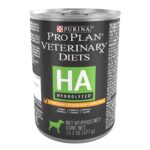
1 food in our catalog lists it, highest on the label first.
Sources
What we read
Checked October 1, 2026.
- 1 A systematic review of the evidence of reduced allergenicity and clinical benefit of food hydrolysates in dogs with cutaneous adverse food reactions
- 2 Evaluation of the clinical and allergen specific serum immunoglobulin E responses to oral challenge with cornstarch, corn, soy and a soy hydrolysate diet in dogs with spontaneous food allergy
- 3 Immunologic responses against hydrolyzed soy protein in dogs with experimentally induced soy hypersensitivity
- 4 Assessment of IgE binding to native and hydrolyzed soy protein in serum obtained from dogs with experimentally induced soy protein hypersensitivity
- 5 A randomized, open-label, positively-controlled field trial of a hydrolyzed protein diet in dogs with chronic small bowel enteropathy
- 6 Evaluation of Soybean Ingredients in Pet Foods Applications: Systematic Review
- 7 Critically appraised topic on adverse food reactions of companion animals (2): common food allergen sources in dogs and cats
- 8 Method of making hypoallergenic pet food (US6783792B2)