
Ingredient file // Preservative
Organic Celery Juice Concentrate
Nitrite with a vegetable name, not a vegetable
Organic celery juice concentrate is celery juice boiled down until its natural nitrate is concentrated, used mainly to cure meat under organic and natural rules. In a dog topper it adds celery flavor and, once converted by bacteria, nitrite, but no meaningful vegetable nutrition.
Role in the food Does a job- What it is
- Celery juice with most of its water removed, used in natural and organic products as a plant source of nitrate.
- Made from
- Organically grown celery, juiced and concentrated
- Main job
- Natural curing agent, plus flavor
- Typical amount
- Fractions of a percent; meat trials used 0.2 to 0.4%
- Watch for
- Still delivers nitrite despite natural or uncured claims
- Not the same as
- Fresh celery or celery seed
Straight answer
Is Organic Celery Juice Concentrate safe for dogs?
Read it as a curing agent, not produce
Next to salt and a meat or broth, near the end of the list, it is a cure or a flavoring in a small dose. Treat uncured and no nitrites added as marketing, keep the topper a topping, and judge the food by its main ingredients.
- Why it is in the food
- Natural curing agent, plus flavor
- How common
- Listed by 1 of the 3,204 foods we track
Our read // In our catalog
In 1 of every 3,204 foods we track
Share of foods that list it
<1%
1 of the 3,204 foods with an ingredient list on file, from 1 brand. All dog food topper.
Each square is 1% of the catalog
Where it sits on the label
Median position 4. In the top five of 1 food, so it is usually a main ingredient.
Above the salt
Usually listed after the salt, which caps it at roughly 1% of the recipe in 100% of foods.
Who leans on it
100%
of the foods that list it are from Castor & Pollux. 1 brand use it in total.
What it is
How it is made
Natural and organic meat makers cannot add purified sodium nitrite, so they cure with high-nitrate vegetables instead. Celery is a common choice: its juice is concentrated, and bacteria turn its nitrate into the nitrite that does the curing.1,2,4,5
- 01 // Source Organic celery Celery is among the vegetables that carry more than 2,500 mg nitrate per kg, which is why curers use it.
- 02 // Process Juiced and concentrated Juice is pressed from the stalks and much of the water is evaporated, concentrating the nitrate and celery flavor compounds.
- 03 // Process Cultured Nitrate-reducing bacteria turn nitrate into nitrite, either inside the meat during a holding step or beforehand at the supplier.
- 04 // Output Concentrate or powder Sold as liquid or dried powder. Pre-converted celery powders tested at about 17,000 to 22,500 ppm nitrite equivalent.
What is in it
Composition, as fed
17,262
ppm nitrite
Nitrite, as sodium nitrite equivalent, measured in a pre-converted organic celery powder. Organic does not mean nitrite-free.
Why it is in the bag
A curing agent and flavor, not a vegetable
- Main nutrition
- Supporting nutrient
- Does a job
- Mostly filler
Makers add it to cure and flavor meat products under natural and organic rules, which bar chemical preservatives. With a starter culture, its nitrate becomes nitrite that gives cured color and flavor. Ham trials used about 0.20%, because 0.35% tasted of vegetables. At doses like that it likely adds no useful vegetable nutrition and no bulk, so it is a working additive, not filler.1,3
-
01
Cures without listed nitrite
Organic and natural products cannot use chemical preservatives. Celery's nitrate, reduced to nitrite by a starter culture, gives typical cured color and flavor instead.1
-
02
Meets organic rules
The USDA National Organic Program does not permit purified nitrite, so organic meat processors have to cure with plant ingredients such as celery or Swiss chard.2
-
03
Adds celery flavor
Celery's phthalides, such as senkyunolide and sedanolide, give it its aroma. In a broth topper that flavor is probably part of the point. In cured ham, 0.35% gave noticeable vegetable off-flavor.2,3
How much In ham trials, vegetable juice powder at 0.20% matched sodium nitrite for sensory scores, while 0.35% left an unwanted vegetable flavor.3
Our read // The claims
What the evidence supports
Strong: controlled studies in dogs agree. Some: small or mixed dog data. Thin: mechanism or lab work only. None: nothing, or the evidence points the other way.
-
Brands say
Natural nitrates cure meat and block spoilage bacteria
Outruns the evidence
Evidence
- Strong
- Some
- Thin
- None
With a starter culture it cures. In 2007 trials, ham at 0.20% matched sodium nitrite controls, and in sausage every treatment except the 0.20%/30-minute one also matched, since incubation time mattered more than dose. Reviewers call its antibotulinal effect unclear.3,4,7
-
Brands say
Adds vegetable goodness to your dog's food
Outruns the evidence
Evidence
- Strong
- Some
- Thin
- None
Celery is safe for dogs and carries some fiber and vitamins, per the AKC. A concentrate used at fractions of a percent, with the fiber juiced out, delivers none of it in a useful amount, and no dog study has tested it.3,11
-
Critics say
Nitrite in dog food causes cancer
Outruns the evidence
Evidence
- Strong
- Some
- Thin
- None
IARC classes processed meat as carcinogenic in people, and nitrite reacts with amines to form nitrosamines. In one sausage study, more celery powder meant more of the nitrosamine NPIP. No study has looked at cancer in dogs from cured toppers.5,6
-
Brands say
No nitrates or nitrites added
Outruns the evidence
Evidence
- Strong
- Some
- Thin
- None
Consumer Reports tested 31 deli meats and found uncured products carried nitrate and nitrite at levels similar to conventionally cured ones. In 2020 FSIS said it would bar the claim for any nitrite source, celery included.8,9
-
Owners say
Natural nitrite is safer than synthetic
Outruns the evidence
Evidence
- Strong
- Some
- Thin
- None
Once formed, nitrite from celery is the same compound as nitrite from a curing salt. In a fermented sausage study, celery powder left NDMA unchanged but raised NPIP as its share rose, so the natural source showed no safety edge.6,8
Straight answers
What owners ask
-
Q01
Is it just filler?
NoIt goes in at fractions of a percent, too little to pad a recipe. Its jobs are curing, through nitrite, and celery flavor. Neither adds bulk or calories.3
-
Q02
Why is celery in a broth topper?
Flavor or cureCelery flavors a broth, and its nitrate fixes color and slows spoilage only after bacteria convert it to nitrite. Unconverted, it is mostly flavor. The label does not say which version was used.1,2
-
Q03
Does organic mean no nitrite?
NoOrganic rules ban purified nitrite, not nitrite itself. A pre-converted organic celery powder tested at 17,262 ppm nitrite equivalent, against 22,487 for a conventional one. Same chemistry, somewhat lower dose.2
Who uses it
Brands, best sellers and the company it keeps
Top brands, by foods that list it
Foods that list it / all the brand's recipes we track.
Usually listed with, share of the foods that list it
- Chicken Broth 100%
- Salt 100%
- Natural Flavor 100%
- Turmeric 100%
On the shelf
Foods that list Organic Celery Juice Concentrate
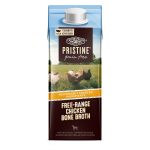
1 food in our catalog lists it, highest on the label first.
Sources
What we read
Checked October 1, 2026.
- 1 Cured meat products without direct addition of nitrate or nitrite: what are the issues?
- 2 Characterization of Volatilized Compounds in Conventional and Organic Vegetable-Source Alternative Meat-Curing Ingredients
- 3 Effects of varying levels of vegetable juice powder and incubation time on color, residual nitrate and nitrite, pigment, pH, and trained sensory attributes of ready-to-eat uncured ham
- 4 Effects of vegetable juice powder concentration and storage time on some chemical and sensory quality attributes of uncured, emulsified cooked sausages
- 5 Nitrites in Cured Meats, Health Risk Issues, Alternatives to Nitrites: A Review
- 6 Using Celery Powder in a Semi-Dry Fermented Sausage "Heat-Treated Sucuk": Nitrosamine Formation, Lipid Oxidation, and Volatile Compounds
- 7 Microbiological safety of processed meat products formulated with low nitrite concentration: a review
- 8 Consumer Reports & CSPI petition USDA to end misleading labels on processed meats
- 9 FSIS partially grants CSPI petition on nitrate/nitrite claims
- 10 21 CFR 573.700 Sodium nitrite
- 11 Can Dogs Eat Celery? Benefits, Risks, and Serving Tips
- 12 ISU Takes Protection of Organic Products to Next Level