
Ingredient file // Flavor
Porterhouse Steak Flavor
A smell for the dog, a name for you
Porterhouse steak flavor is a natural flavoring with an unpublished recipe, added in a small amount so wet food smells like steak. It gets dogs eating and puts a steak name on the can. It adds no meaningful nutrition.
Role in the food Does a job- What it is
- A natural flavoring meant to make wet dog food smell and taste like grilled steak. The maker does not publish the recipe.
- Made from
- Not disclosed; meat flavors usually start from animal tissue
- Main job
- Aroma that gets dogs eating
- Typical amount
- Not published; palatants on dry food run 0.5 to 3%
- Watch for
- Unnamed source matters for dogs with beef allergy
- Not the same as
- Porterhouse steak
Straight answer
Is Porterhouse Steak Flavor safe for dogs?
Ignore the steak name and read the meats
Expect this flavor near the end of the list, below salt, where it belongs. That position tells you it is there for smell and for the name on the front. Judge the food by the named meats at the top, and skip it if your dog reacts to beef.
- Why it is in the food
- Aroma that gets dogs eating
- Watch for
- Dogs with beef allergy
- How common
- Listed by 2 of the 3,204 foods we track
Our read // In our catalog
In 1 of every 1,602 foods we track
Share of foods that list it
<1%
2 of the 3,204 foods with an ingredient list on file, from 1 brand. 1 wet dog food, 1 dry dog food.
Each square is 1% of the catalog
Where it sits on the label
Median position 21. In the top five of 0 foods, so it is usually a minor ingredient.
Above the salt
Usually listed after the salt, which caps it at roughly 1% of the recipe in 100% of foods.
Price per lb
Median of the cheapest bag price across 1 priced foods, 26% below the catalog. The price is the food's, not the ingredient's.
Who leans on it
100%
of the foods that list it are from Cesar. 1 brand use it in total.
What it is
How it is made
Flavor suppliers and pet food makers break down animal tissue with enzymes and heat to get concentrated meat aromas. Cesar does not publish how its porterhouse flavor is made. This is the standard route for meat flavors.5,6,7
- 01 // Source Animal tissue Meat flavors usually start from hydrolyzed animal tissue such as poultry, pork or beef.
- 02 // Process Enzyme digestion Proteases and lipases split proteins and fats into peptides, amino acids and fatty acids.
- 03 // Process Heated with sugars Heat drives Maillard reactions between amino acids and sugars, which build roasted, savory aroma compounds.
- 04 // Process Acid stabilized In one published beef digest, phosphoric acid brought the liquid to about pH 4 to keep it stable.
- 05 // Output Liquid or powder flavor A concentrated flavoring, added in small amounts and listed under whatever name the maker gives it.
What is in it
Composition, as fed
59-61
% water
Water in a published beef digest. The rest is protein, fat and salts, there for smell and not as a real nutrient source.
Why it is in the bag
There for smell and the steak name
- Main nutrition
- Supporting nutrient
- Does a job
- Mostly filler
Makers add it for 2 reasons. Smell drives a dog's food choice, so a meaty aroma gets dogs eating. And AAFCO lets a flavor name go on the label when a listed ingredient supplies that flavor. Labels list ingredients by weight, and this one sits below salt, so it is likely too little to change the food's nutrition. Its value is the aroma and the name on the front.1,2,5
-
01
Puts steak on the label
AAFCO allows a flavor name on the label if a listed ingredient provides that flavor and the word flavor is printed as prominently as the name. The flavoring is that ingredient.2
-
02
Covers off-notes
Reviews describe some flavor compounds as masking agents, added to cover off-flavors and odors. A small dose changes the smell without changing the nutrition.5
How much No maker publishes the dose. A review puts powder palatants at 0.5 to 2% and liquid palatants at 1 to 3% of dry foods.5
Our read // The claims
What the evidence supports
Strong: controlled studies in dogs agree. Some: small or mixed dog data. Thin: mechanism or lab work only. None: nothing, or the evidence points the other way.
-
Brands say
Added flavor makes the food more appealing to dogs
Evidence
- Strong
- Some
- Thin
- None
Smell drives a dog's choice, and dogs that temporarily lost their sense of smell stopped telling foods apart. In a 25-dog two-pan test, food with liver hydrolysate won. No trial has tested this particular flavor.5
-
Owners say
Dogs like beef best
Outruns the evidence
Evidence
- Strong
- Some
- Thin
- None
A 2021 review cites one older preference study, Lohse, that ranked beef first, then lamb and chicken. We could read only the review's summary of it. One study is thin support, and it says nothing about flavorings.5
-
Critics say
Flavors are there to hide poor ingredients
Outruns the evidence
Evidence
- Strong
- Some
- Thin
- None
Reviews do say some flavor compounds mask off-flavors and odors. Nothing shows this food uses its flavor that way, and the recipe lists beef first, ahead of liver, lung and heart.1,5
-
Owners say
Porterhouse steak flavor means there is steak inside
Outruns the evidence
Evidence
- Strong
- Some
- Thin
- None
AAFCO's flavor rule only needs a listed ingredient to supply the flavor, and the flavoring itself counts. The Merck manual reads a beef flavor name as under 3% beef. Porterhouse here is a menu word.2,4
-
Brands say
A natural flavor is safer than an artificial one
Outruns the evidence
Evidence
- Strong
- Some
- Thin
- None
AAFCO's natural definition allows rendering, hydrolysis and enzyme treatment. It also says outright that natural ingredients are not required to be, or claimed to be, safer than synthetic ones.1,3
Straight answers
What owners ask
-
Q01
Is there porterhouse steak in it?
Not requiredThe rule only says a listed ingredient must supply the flavor. This food does list real beef, but nothing requires a porterhouse cut, and the flavor recipe is not published.1,2
-
Q02
Is it just filler?
No, it's flavorFiller means bulk with no job. This is the opposite: a small amount, listed below salt, and its job is smell. It adds almost nothing to the nutrition and is not meant to.1,5
-
Q03
Is it an artificial flavor?
Natural, by labelCesar says its flavors meet AAFCO's definition of natural. That definition still allows rendering, hydrolysis and enzyme treatment, so natural describes the source and the process, not quality or safety.1,3
Who uses it
Brands, best sellers and the company it keeps
Top brands, by foods that list it
Foods that list it / all the brand's recipes we track.
Usually listed with, share of the foods that list it
- Beef 100%
- Pork By-Products 50%
- Chicken Liver 50%
- Chicken Broth 50%
- Water 50%
- Beef Lung 50%
- Chicken Heart 50%
- Calcium Carbonate 50%
- Sodium Tripolyphosphate 50%
- Ground Yellow Corn 50%
- Chicken By-Product Meal 50%
- Wheat 50%
On the shelf
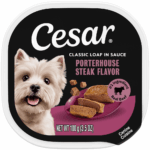
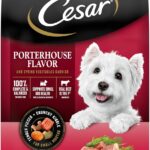
Foods that list Porterhouse Steak Flavor
2 foods in our catalog list it, highest on the label first.
Sources
What we read
Checked October 1, 2026.
- 1 CESAR Classic Loaf in Sauce Porterhouse Steak Flavor Adult Wet Dog Food
- 2 Reading Labels
- 3 Natural
- 4 Dog and Cat Foods
- 5 Dry Pet Food Flavor Enhancers and Their Impact on Palatability: A Review
- 6 Modern Palatant Strategies in Dry and Wet Pet Food: Formulation Technologies, Patent Innovations, and Market Evolution
- 7 Dry dog food of improved palatability (US 4,211,797, Gaines Pet Foods Corp)
- 8 Critically appraised topic on adverse food reactions of companion animals (2): common food allergen sources in dogs and cats