
Ingredient file // Starch
Yams
A useful starch with unproven health perks
True yams are starchy tubers, although Americans often call sweet potatoes yams too. In kibble, yam mainly brings carbohydrate for energy and structure. Claims about better stools or antioxidant protection lack yam-specific dog feeding evidence.
Role in the food Supporting nutrient
- What it is
- The edible tuber of a yam plant, used fresh or processed into flour as a starch ingredient.
- Made from
- Cultivated yam tubers
- Main job
- Starch for energy and kibble
- Typical amount
- Not published
- Watch for
- Whether the maker means true yam or sweet potato
- Not the same as
- Sweet potatoes
Straight answer
Is Yams safe for dogs?
Read yam as starch and check the rest
If yams sit high on the ingredient list, treat them as a substantial starch source. Look at the named animal proteins and the other carbohydrates around them. Ask the maker whether yam means a true yam or sweet potato if that matters. Set aside stool and antioxidant promises without dog feeding evidence.
- Why it is in the food
- Starch for energy and kibble
- Watch for
- Unidentified wild yams
- How common
- Listed by 7 of the 3,204 foods we track
Our read // In our catalog
In 1 of every 458 foods we track
Share of foods that list it
<1%
7 of the 3,204 foods with an ingredient list on file, from 3 brands. 3 frozen dog food, 2 dog food topper, 2 dry dog food.
Each square is 1% of the catalog
Where it sits on the label
Median position 6. In the top five of 2 foods, so it is usually a supporting ingredient.
Above the salt
Almost always listed before the salt, so there is more of it than a pinch.
Price per lb
Median of the cheapest bag price across 2 priced foods, 47% above the catalog. The price is the food's, not the ingredient's.
Who leans on it
43%
of the foods that list it are from Raw Bistro. 3 brands use it in total.
What it is
How it is made
Yams are grown for food; growing them specifically for feed is seldom economical. Surplus tubers offer pet food makers a starch source. For flour, processors cut and dry the moist tubers before milling them.2,3,6,9
- 01 // Source Cultivated tubers Food yam tubers are harvested with substantial water and starch in their flesh.
- 02 // Process Washed and chipped In a documented flour method, processors wash the tubers and cut them into chips.
- 03 // Process Dried and milled The chips are dried to remove water, then ground into flour that stores more easily.
- 04 // Output Yam flour The dry flour provides starch for the recipe; a label saying yams alone does not disclose the form used.
What is in it
Composition, dry matter
60-74
% starch
The measured range in cultivated water yam varieties. Starch is the main contribution to kibble; fiber and protein account for much less.
Why it is in the bag
A secondary starch for energy, not the base
- Main nutrition
- Supporting nutrient
- Does a job
- Mostly filler
Water yam is mostly starch, about 60 to 74% of its dry weight, and dogs digest cooked starch well. Lists run by weight, so when yam sits behind the meats and organs, it is likely a secondary carbohydrate, not what the food is built on. Near the top of a list it would be the main starch. In kibble, that starch also helps bind the pieces. It adds little protein.1,2,3,9
-
01
Supplies cooked starch
Water yam is mostly starch on a dry basis. Cooked starch supplies dietary energy, though the cited dog digestibility trial tested lentil pasta rather than yam.1,2
-
02
Helps form kibble
Starch thickens during extrusion and helps a kibble hold its shape. Yam flour offers that function, but its performance in dog food has not been tested here.1,3
-
03
Uses surplus crop
Growing yam just for feed seldom pays. Surplus food tubers give manufacturers another starch option when local supply and price make sense.6
How much A tested inclusion rate for true yam in dog food was not found; ingredient lists report weight order, not recipe percentages.9
Our read // The claims
What the evidence supports
Strong: controlled studies in dogs agree. Some: small or mixed dog data. Thin: mechanism or lab work only. None: nothing, or the evidence points the other way.
-
Brands say
Yams supply useful energy in kibble
Evidence
- Strong
- Some
- Thin
- None
An analysis of 16 water yam varieties found 60.3 to 74.4% starch on a dry basis. Dogs digested cooked starch well in a lentil pasta trial, but that trial did not test yam.1,2
-
Brands say
Yam fiber supports a dog's digestion
Outruns the evidence
Evidence
- Strong
- Some
- Thin
- None
The 16 water yam varieties contained 4.1 to 11% total dietary fiber. A brand promotes yam fiber, but the cited dog trial fed lentil pasta, so it cannot show a digestive benefit from yam.1,2,10
-
Brands say
Yam antioxidants protect dogs from damage
Outruns the evidence
Evidence
- Strong
- Some
- Thin
- None
A flour study measured antioxidant activity after treating purple yam with different soaking solutions. It was a laboratory assay, not a dog feeding trial, and says nothing about protection from yam in finished kibble.5,10
-
Critics say
Yams are just empty filler
Outruns the evidence
Evidence
- Strong
- Some
- Thin
- None
The 16-variety analysis measured substantial starch, which supplies energy and serves a recipe function. Yam is not a meaningful protein source, but calling its main contribution empty ignores that starch.1,2
Straight answers
What owners ask
-
Q01
Is it just filler?
NoYam supplies starch for energy and kibble structure. It does not replace meat as a protein source. Judge how much space it takes in the recipe alongside the named proteins and other starches.1,2,9
-
Q02
Are yams sweet potatoes?
True yams aren'tThey come from different plants. Americans also use yam as a name for some sweet potatoes, so ask the maker which plant it uses if that distinction matters to your dog.8
-
Q03
Does yam make grain-free healthier?
No proofReplacing grain with yam changes the starch source. The cited dog trial studied lentil pasta rather than yam and offers no evidence that a grain-free yam recipe improves a healthy dog's health.1
-
Q04
How much yam is in this food?
Ask the makerIngredients appear in descending order by weight, but the list does not give percentages. A prominent yam listing signals substantial weight before cooking; only the maker can provide its recipe amount.9
Who uses it
Brands, best sellers and the company it keeps
Top brands, by foods that list it
Foods that list it / all the brand's recipes we track.
Usually listed with, share of the foods that list it
- Cranberries 57%
- Turkey 43%
- Flaxseed 43%
- Chicken 43%
- Eggs 29%
- Chicken Gizzard 29%
- Potato Flour 29%
- Vegetable Oil 29%
- Turkey Gizzard 29%
- Turkey Liver 29%
- Turkey Heart 29%
- Spinach 29%
On the shelf
Foods that list Yams
7 foods in our catalog list it, highest on the label first.
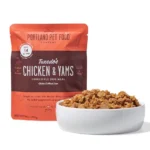 Portland Pet Food CompanyPortland Pet Food Company Meals & Mixers Tuxedo’s Chicken & Yams - For Picky Eaters, Seniors Dog Food Topper
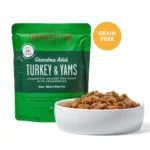 Portland Pet Food CompanyPortland Pet Food Company Meals & Mixers Grandma Ada’s Turkey & Yams Grain-Free Dog Food Topper
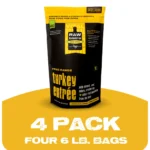 Raw BistroRaw Bistro Turkey Entree 4 Pack Frozen Dog Food
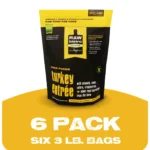 Raw BistroRaw Bistro Turkey Entree 6 Pack Frozen Dog Food
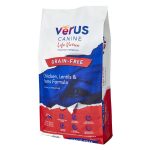 VerusVerus Grain-Free Life Virtue Chicken, Lentils & Yams Formula Dry Dog Food
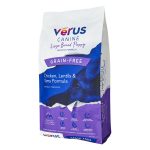 VerusVerus Grain-Free Large Breed Puppy Chicken, Lentils & Yams Formula Dry Dog Food
On labels as
Organic yams: what changes
One page covers every name. Here is what each label word adds, and whether it changes anything for your dog.
Organic yams
Matters for your dog A little
Organic Yams
What it means The USDA National Organic Program sets the rules, and a certifier checks the farm. The yams must be grown without synthetic fertilizers, sewage sludge, irradiation or genetic engineering, and most synthetic pesticides are banned. USDA does not call organic food safer or more nutritious.
For your dog A 2014 meta-analysis of human food crops found pesticide residues 4 times more often on conventional crops. Organic crops also had more of some plant compounds, such as 19% more phenolic acids. No study has tested organic yams, or any organic starch, in dog food.11,12,13
- Strong
- Some
- Thin
- None
Sources
What we read
Checked October 1, 2026.
- 1 Lentils pasta by-product in a complete extruded diet for dogs and its effect on extrusion, digestibility, and carbohydrate metabolism
- 2 Nutritional and biochemical composition of D. alata (Dioscorea spp.) tubers
- 3 Changes in nutritional composition, functional, and sensory properties of yam flour as a result of presoaking
- 4 Varietal and environmental influences on organoleptic and cooking quality of water yam (Dioscorea alata) landraces
- 5 Effect of Soaking Treatment on Anthocyanin, Flavonoid, Phenolic Content and Antioxidant Activities of Dioscorea alata Flour
- 6 Winged yam (Dioscorea alata)
- 7 Roots, tubers, plantains and bananas in human nutrition - Toxic substances and antinutritional factors
- 8 Getting More Uses Out of The Vitamin-Packed Sweetpotato
- 9 What’s in the Ingredients List?
- 10 Grain Free Dog Food Topper For Picky Eaters, Seniors | Turkey
- 11 Organic
- 12 National Organic Program: What Agricultural Professionals Need to Know
- 13 Higher antioxidant and lower cadmium concentrations and lower incidence of pesticide residues in organically grown crops: a systematic literature review and meta-analyses