
Ingredient file // Grain
Ground Whole Grain Barley
Useful kibble starch, with unproven health claims
Ground whole grain barley is a milled barley kernel with its bran and germ retained. It gives dogs usable starch and helps kibble hold together. Its fiber is real, but the ingredient name does not promise steadier blood sugar or lower cholesterol.
Role in the food Main nutrition- What it is
- Barley kernels milled into meal, with the bran and germ retained after any tough outer hull is removed.
- Made from
- Whole barley kernels
- Main job
- Energy and kibble structure
- Typical amount
- Not published
- Watch for
- Mold toxins in contaminated grain
- Not the same as
- Pearled barley
Straight answer
Is Ground Whole Grain Barley safe for dogs?
Read barley as starch with some fiber
Barley near the top of the ingredient list makes it a substantial part of the recipe by weight; farther down, it contributes less. Check the named protein sources and the food's nutrient analysis. Give blood sugar and cholesterol promises little weight unless they concern the tested finished food.
- Why it is in the food
- Energy and kibble structure
- How common
- Listed by 9 of the 3,204 foods we track
Our read // In our catalog
In 1 of every 356 foods we track
Share of foods that list it
<1%
9 of the 3,204 foods with an ingredient list on file, from 2 brands. All dry dog food.
Each square is 1% of the catalog
Where it sits on the label
Median position 4. In the top five of 8 foods, so it is usually a main ingredient.
Above the salt
Almost always listed before the salt, so there is more of it than a pinch.
Price per lb
Median of the cheapest bag price across 6 priced foods, 52% below the catalog. The price is the food's, not the ingredient's.
Who leans on it
67%
of the foods that list it are from Iams. 2 brands use it in total.
What it is
How it is made
Barley is harvested as a cereal grain and milled for use in food and feed. Removing any tough outer hull leaves the edible kernel; grinding that kernel makes a dry ingredient that mixes into kibble.8,10
- 01 // Source Barley kernels Harvested kernels contain starch, bran and germ beneath a tough hull, unless the variety sheds its hull at harvest.
- 02 // Process Hull removed For covered barley, the inedible hull is taken off while the bran and germ remain with the kernel.
- 03 // Process Kernels ground Milling reduces the whole kernels to smaller particles that mix evenly with other dry ingredients.
- 04 // Output Ground whole barley The resulting grain meal arrives at the kibble plant ready for mixing and cooking.
What is in it
Composition, dry matter
60
% starch
The average starch share of barley grain. It explains why this ingredient mainly supplies energy and structure, despite also carrying fiber.
Why it is in the bag
A main starch source when listed near the top
- Main nutrition
- Supporting nutrient
- Does a job
- Mostly filler
Barley grain averages about 60% starch on a dry basis. It mainly supplies calories, and that starch helps kibble hold together. Ingredient lists run from most to least by weight. When barley sits near the top of the list, it is likely one of the food's main energy sources. Listed farther down, it is likely a minor grain. In either spot it is not a major protein source, and calling it filler ignores those real jobs.6,10
-
01
Supplies usable starch
Barley starch provides calories. In a dog diet comparison, the barley food's carbohydrate fraction was digestible, though less completely than the rice and corn foods' fractions.2,6
-
02
Helps kibble hold together
Starch binds and expands during cooking. AAFCO lists barley among plant ingredients that supply calories and help dry kibble keep its shape.2,10
-
03
Adds some grain fiber
Whole grain milling retains the bran. Barley also contains beta glucans, but the ingredient name does not disclose how much reaches the finished food.7,8
-
04
Offers bulk grain supply
Barley is purchased at large scale for pet food, giving manufacturers a regular grain supply for the starch share of dry recipes.11
How much Dog studies tested diets containing 10, 20, 25 and 40% barley; those experimental levels do not show a typical commercial amount.1,5
Our read // The claims
What the evidence supports
Strong: controlled studies in dogs agree. Some: small or mixed dog data. Thin: mechanism or lab work only. None: nothing, or the evidence points the other way.
-
Brands say
Barley gives dogs usable energy
Evidence
- Strong
- Some
- Thin
- None
Barley grain averages about 60% starch on a dry basis. In an 8-dog comparison, the barley food's carbohydrate fraction was 90.10% digestible. That supports an energy role, though the tested food digested less completely than rice or corn foods.2,6
-
Critics say
Barley diets digest less completely than rice diets
Evidence
- Strong
- Some
- Thin
- None
Two finished-food comparisons point the same way. A 30-dog trial measured dry matter digestibility of 83.85% for a barley food versus 86.10% for a rice food, and an 8-dog comparison placed a barley food below rice too, but both tested specific recipes, not barley in isolation, so the result cannot be generalized to every barley diet.1,2
-
Brands say
Barley keeps blood sugar steady
Outruns the evidence
Evidence
- Strong
- Some
- Thin
- None
A 15-dog diabetic trial favored a pea-and-barley food over maize, but it could not isolate barley. In a separate 16-dog trial that varied barley itself, postmeal glucose did not improve. The ingredient alone has no demonstrated glucose benefit.3,5
-
Brands say
Barley beta glucan lowers cholesterol in dogs
Outruns the evidence
Evidence
- Strong
- Some
- Thin
- None
A 12-dog diabetic trial found lower cholesterol with a pea-and-barley food than with maize. It did not isolate barley or measure dietary beta glucan. A separate 16-dog barley trial found no cholesterol improvement, so this specific claim is unsupported.4,5
-
Critics say
Barley is just filler
Outruns the evidence
Evidence
- Strong
- Some
- Thin
- None
Barley supplies starch and fiber, and AAFCO identifies a structural job for it in kibble. In an 8-dog comparison, the barley food's carbohydrate fraction was 90.10% digestible. Calling an ingredient with these jobs filler obscures what it contributes.2,6,10
Straight answers
What owners ask
-
Q01
Is it just filler?
NoBarley provides usable starch, some fiber and structure for dry kibble. Judge how much of the recipe relies on it and what protein and fat sources sit nearby on the ingredient list.2,6,10
-
Q02
Is whole barley different from pearled?
YesWhole grain barley keeps its bran and germ after any inedible hull is removed. Pearling removes some or all of the bran. Ground tells you particle size; whole grain tells you which kernel parts remain.8
-
Q03
Is barley better than rice?
No clear edgeIn a 30-dog comparison, the rice food was somewhat more digestible, while preference and stool consistency were similar. That trial compares finished foods, so it cannot rank every barley recipe against every rice recipe.1
Who uses it
Brands, best sellers and the company it keeps
Top brands, by foods that list it
Foods that list it / all the brand's recipes we track.
Amazon best sellers that list it
Rank on Amazon's dog food best seller list, checked October 2026.
Usually listed with, share of the foods that list it
- Chicken By-Product Meal 100%
- Ground Whole Grain Sorghum 100%
- Chicken 78%
- Dried Beet Pulp 78%
- Chicken Fat 78%
- Mixed Tocopherols 78%
- Whole Grain Ground Corn 67%
- Natural Flavor 67%
- Dried Egg Product 56%
- Brewers Rice 44%
- Corn Meal 33%
- Chicken Flavor 33%
On the shelf
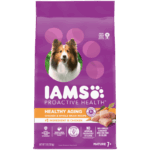
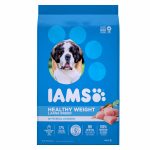
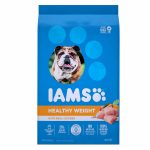
Foods that list Ground Whole Grain Barley
9 foods in our catalog list it, highest on the label first.




Sources
What we read
Checked October 1, 2026.
- 1 Barley as an alternative to rice in dog food
- 2 Nutritional value of common carbohydrate sources used in pet foods
- 3 Effects of pea with barley and less-processed maize on glycaemic control in diabetic dogs
- 4 Starch sources influence lipidaemia of diabetic dogs
- 5 Fish Oil and Barley Supplementation in Diets for Adult Dogs: Effects on Lipid and Protein Metabolism, Nutrient Digestibility, Fecal Quality, and Postprandial Glycemia
- 6 Barley grain
- 7 Barley grain
- 8 Types of Barley
- 9 Chemical Contaminants
- 10 What's in the Ingredients List?
- 11 Pet Food Production and Ingredient Analysis