
Ingredient file // Animal protein
Duck Liver
Useful organ protein, with copper worth watching
Duck liver is an organ recovered when ducks are processed for meat. It adds protein, iron, copper and vitamin A to dog food. Its flavor may appeal to dogs, but tests of hydrolyzed chicken liver do not tell us how ordinary duck liver performs.
Role in the food Supporting nutrient
- What it is
- The liver separated from a duck during poultry processing and used as an animal ingredient.
- Made from
- Duck livers recovered during processing
- Main job
- Animal protein and flavor
- Typical amount
- Not published
- Watch for
- Extra liver in copper restricted diets
- Not the same as
- Liver digest
Straight answer
Is Duck Liver safe for dogs?
Read the whole recipe around the liver
Duck liver is a useful organ addition, especially alongside a named main animal protein. Its place on the ingredient list reflects weight before cooking and does not reveal the amount in the finished food. Check the nutritional adequacy statement. For a dog needing copper restriction, check the food's total copper level.
- Why it is in the food
- Animal protein and flavor
- How common
- Listed by 15 of the 3,204 foods we track
Our read // In our catalog
In 1 of every 214 foods we track
Share of foods that list it
<1%
15 of the 3,204 foods with an ingredient list on file, from 9 brands. 6 freeze-dried dog food, 4 frozen dog food, 3 dry dog food.
Each square is 1% of the catalog
Where it sits on the label
Median position 3. In the top five of 13 foods, so it is usually a main ingredient.
Above the salt
Almost always listed before the salt, so there is more of it than a pinch.
Price per lb
Median of the cheapest bag price across 5 priced foods, 60% above the catalog. The price is the food's, not the ingredient's.
Who leans on it
20%
of the foods that list it are from Vital Essentials. 9 brands use it in total.
What it is
How it is made
Duck processors remove the organs while preparing birds for meat. They recover the liver from the other giblets, inspect it and chill it. Selling usable giblets gives the processor another source of revenue.5,7,8
- 01 // Source Processed ducks The liver comes out with the other internal organs when a duck is processed.
- 02 // Process Giblets sorted The liver is separated from the heart, gizzard and inedible material.
- 03 // Process Inspected and chilled Processors inspect and wash recovered giblets, then chill them for storage or shipment.
- 04 // Output Duck liver The recovered organ enters a pet food recipe; dried and ground liver is a different ingredient.
What is in it
Composition, dry matter
66
% protein
About two-thirds of this raw duck liver reference entry's dry matter is protein. Fresh liver also carries substantial water, which affects its label position.
Why it is in the bag
Real protein and minerals; how much depends on amount
- Main nutrition
- Supporting nutrient
- Does a job
- Mostly filler
Duck liver adds real nutrition, not bulk: about 66% protein and 16% fat on a dry matter basis, plus iron, copper and vitamin A. How much reaches the dog depends on an amount labels do not disclose. Lists rank ingredients by weight as added, and raw liver is about 72% water, so even near the top its share of the finished food is smaller than its rank suggests. Listed lower, it mainly adds minerals and vitamin A.4,6
-
01
Adds animal protein
Duck liver supplies protein alongside iron and copper. Because fresh liver contains substantial water, its protein contribution per pound as added is lower than its dry matter figure.4
-
02
Adds liver flavor
Liver ingredients are used for flavor. A supplier reported a preference for kibble coated with hydrolyzed chicken liver, but that test does not measure ordinary duck liver.1,12
-
03
Uses recovered giblets
Poultry plants already sort livers from other organs. Selling usable giblets brings in revenue from material recovered during the same processing run.7,8
How much A dog trial fed up to 26% hydrolyzed chicken liver powder; that does not set an amount for ordinary duck liver.1
Our read // The claims
What the evidence supports
Strong: controlled studies in dogs agree. Some: small or mixed dog data. Thin: mechanism or lab work only. None: nothing, or the evidence points the other way.
-
Brands say
Duck liver supplies protein and iron
Evidence
- Strong
- Some
- Thin
- None
A raw duck liver reference entry works out to about 66% protein and 1,082 mg/kg iron on a dry matter basis. Those nutrients are present, but the ingredient list does not disclose how much liver the food contains.4,6
-
Brands say
Duck liver is highly digestible
Outruns the evidence
Evidence
- Strong
- Some
- Thin
- None
In a 12-dog trial, diets made with hydrolyzed chicken liver powder had higher protein digestibility than diets made with poultry by-product meal. Hydrolysis changes the ingredient, so the trial does not show how digestible ordinary duck liver is.2
-
Brands say
Duck liver makes dogs eat more
Outruns the evidence
Evidence
- Strong
- Some
- Thin
- None
A supplier reported 85% first choice for kibble coated with its hydrolyzed chicken liver. A separate 22-dog preference test also studied hydrolyzed chicken liver. Neither result measures ordinary duck liver or proves it increases food intake.1,12
-
Brands say
Duck liver boosts immunity through vitamin A
Outruns the evidence
Evidence
- Strong
- Some
- Thin
- None
The raw duck liver entry works out to about 425 mg/kg retinol on a dry matter basis. Vitamin A supports normal immune function, but no dog trial shows an immune benefit from adding duck liver to a balanced food.4,9
-
Critics say
Duck liver is just filler
Outruns the evidence
Evidence
- Strong
- Some
- Thin
- None
About 66% of the organ's dry matter is protein in the reference entry, which also records iron, copper and retinol. It has a nutritional job; its contribution to any food depends on the amount used.4,6
Straight answers
What owners ask
-
Q01
Is it just filler?
NoDuck liver contributes protein and minerals. A small amount will not transform the recipe, but the organ has a nutritional job even when it appears low on the ingredient list.4,6
-
Q02
Does duck liver mean raw food?
NoThe name identifies the ingredient, not the finished food's processing. Duck liver can go into cooked pet food. For a raw product, look for raw on the food or treat label.7,11
-
Q03
Should I add liver treats?
Keep them modestDuck liver contains vitamin A and copper. Extra liver is unnecessary to make a complete food balanced, and it needs particular attention when your dog is on a copper restricted diet.4,9,10
Who uses it
Brands, best sellers and the company it keeps
Top brands, by foods that list it
Foods that list it / all the brand's recipes we track.
Usually listed with, share of the foods that list it
- Duck 73%
- Duck Gizzards 40%
- Duck Heart 40%
- Green Beans 33%
- Duck with Ground Bone 27%
- Broccoli 27%
- Fish Oil 27%
- Butternut Squash 27%
- Mixed Tocopherols 20%
- Vitamin E 20%
- Zinc Amino Acid Complex 20%
- Iron Amino Acid Complex 20%
On the shelf
Foods that list Duck Liver
15 foods in our catalog list it, highest on the label first.
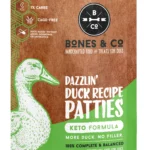 Bones & CoBones & Co Cage-Free Duck Raw - The Bones & Co. Frozen Dog Food
 NuloNulo Raw Duck Recipe with Pears Freeze-Dried Dog Food
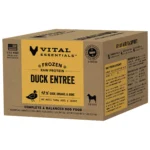
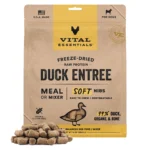 Vital EssentialsVital Essentials Duck Soft Nibs Freeze-Dried Dog Food
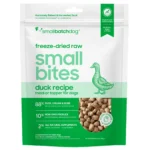 SmallbatchSmallbatch Freeze-Dried Duck Small Bites Freeze-Dried Dog Food
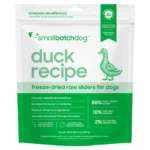 SmallbatchSmallbatch Duck Sliders Freeze-Dried Dog Food
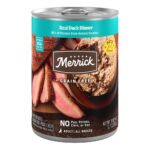 MerrickMerrick Grain Free Real Duck Wet Dog Food
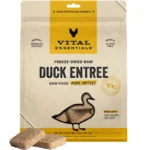 Vital EssentialsVital Essentials Duck Mini Patties Freeze-Dried Dog Food
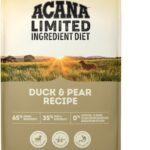 AcanaAcana Singles Limited Ingredient Diet Duck & Pear Recipe Grain-Free Dry Dog Food
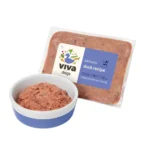 Viva RawViva Raw Complete Diet Duck Frozen Dog Food
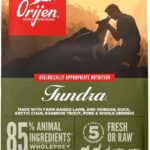
 OrijenOrijen Tundra Freeze-Dried Dog Food
 AcanaAcana Wholesome Grains Limited Ingredient Diet Duck & Pumpkin Recipe Dry Dog Food
 Earth AnimalEarth Animal Wisdom Air-Dried From the Air Recipe Dog Food Topper
On labels as
Raw duck liver: what changes
One page covers every name. Here is what each label word adds, and whether it changes anything for your dog.
Raw duck liver
Matters for your dog Yes
Raw Duck Liver
What it means AAFCO's feed terms, as summarized in a 2025 review, describe raw as food in its natural state that was not heated during preparation. The same review notes that makers and regulators define raw diets inconsistently. The word does not promise the food is free of germs.
For your dog The difference is germ risk, not nutrition: FDA found Salmonella in 15 and Listeria in 32 of 196 raw pet food samples, and CDC says freezing or freeze drying only reduces germs. Water and list rank are the same as plain duck liver, which is also a wet organ.4,11,13,14
- Strong
- Some
- Thin
- None
Sources
What we read
Checked October 2, 2026.
- 1 Characterisation of spray dried hydrolysed chicken liver powder: effects on palatability and digestibility when included as single source of animal protein in dog diets
- 2 Effects of hydrolyzed chicken liver on digestibility, fecal and urinary characteristics, and fecal metabolites of adult dogs
- 3 Original Research: Effect of various dietary fats on fatty acid profile in duck liver: Efficient conversion of short-chain to long-chain omega-3 fatty acids
- 4 Domesticated Duck Liver
- 5 Liver meal from warm-blooded animals
- 6 Reading Labels
- 7 2. SLAUGHTERHOUSES
- 8 Manual giblet processing
- 9 Nutritional Requirements of Small Animals
- 10 Copper Toxicosis in Animals
- 11 About Pet Food Safety
- 12 Nutrient density of hydrolyzed chicken liver powders
- 13 Get the Facts! Raw Pet Food Diets can be Dangerous to You and Your Pet
- 14 Reconciling the definitions of raw meat-based diets and biologically appropriate raw foods for companion animals: a mini review