
Ingredient file // Vitamin or mineral
Lysine
A precise amino acid top-up, not a health booster
Lysine is an essential amino acid. The form on a kibble label is a near-pure powder made by bacterial fermentation. It tops up recipes whose grain and plant proteins run short, and it does nothing extra once the requirement is met.
Role in the food Supporting nutrient- What it is
- A purified essential amino acid, added on its own so the recipe's protein mix meets the dog's lysine need.
- Made from
- Sugar fermented by Corynebacterium bacteria
- Main job
- Fills the lysine gap
- Typical amount
- Not published
- Watch for
- Extra lysine supplements on top of complete food
- Not the same as
- Lysine supplements sold for cats
Straight answer
Is Lysine safe for dogs?
Read it as a clue about the protein
Lysine low in the list, among the vitamins and minerals, means the formulator topped up the protein mix, usually because corn, rice or other plant proteins carry the load. That is sound nutrition, not a flaw. Judge the protein sources above it, and skip lysine supplements for a dog on a complete food.
- Why it is in the food
- Fills the lysine gap
- How common
- Listed by 1 of the 3,204 foods we track
Our read // In our catalog
In 1 of every 3,204 foods we track
Share of foods that list it
<1%
1 of the 3,204 foods with an ingredient list on file, from 1 brand. All dry dog food.
Each square is 1% of the catalog
Where it sits on the label
Median position 18. In the top five of 0 foods, so it is usually a minor ingredient.
Above the salt
Usually listed after the salt, which caps it at roughly 1% of the recipe in 100% of foods.
Who leans on it
100%
of the foods that list it are from Wysong. 1 brand use it in total.
What it is
How it is made
Feed-grade lysine comes from the fermentation industry that supplies pig and poultry feed. Bacteria turn sugar into lysine in large tanks, a process Japan began in the 1960s.1,2,3
- 01 // Source Sugar and ammonia Tanks are fed glucose or sugar, with ammonium salts as the nitrogen source, plus minerals and vitamins.
- 02 // Process Bacterial fermentation Selected Corynebacterium glutamicum strains turn more than half the sugar's weight into lysine HCl.
- 03 // Process Purified Purification strips out the bacteria. EFSA found no live production cells or recombinant DNA in the final product.
- 04 // Process Made into a salt Lysine is bound to hydrochloric acid and dried into a stable crystal, with no antibiotics used in the process.
- 05 // Output L-lysine HCl A dry powder specified at 78% lysine or more on a dry basis and under 1% moisture.
What is in it
Composition, dry matter
79
% lysine
Analyzed lysine in feed-grade lysine HCl. A tiny amount does the job, because nearly every gram is the amino acid itself.
Why it is in the bag
A small top-up that fixes a real protein gap
- Main nutrition
- Supporting nutrient
- Does a job
- Mostly filler
Makers add lysine because corn's main protein is short of it, so recipes built on grain and plant proteins often need a top-up to meet the dog's requirement (9). The powder is about 79% lysine on a dry matter basis (1), so a small amount does real work even low on the list. That makes it a supporting nutrient, not filler, though it signals that plant protein carries the recipe.1,9
-
01
Fixes the limiting amino acid
Lysine is the first or second amino acid commercial dog foods run short of. Corn's main protein, zein, is low in it, so grain-heavy recipes often need it added.5,9
-
02
Cheaper than more protein
Fermentation made lysine a bulk commodity, 500,000 to 600,000 tonnes a year by 2000 at around $1.5 per kg. A pinch meets the target without adding more meat or soy.3
-
03
Less surplus protein
In pig and poultry feed, added amino acids let formulators cut excess protein. FAO says each point of protein removed cuts nitrogen excretion 8 to 10%. That figure is livestock, not dogs.3
How much No source publishes recipe amounts. Puppies on purified diets needed about 0.46 to 0.58% lysine, and 1.73% total lysine slowed their growth.6
Our read // The claims
What the evidence supports
Strong: controlled studies in dogs agree. Some: small or mixed dog data. Thin: mechanism or lab work only. None: nothing, or the evidence points the other way.
-
Brands say
Added lysine makes up for low-lysine grain protein
Evidence
- Strong
- Some
- Thin
- None
Corn protein holds only 2.6 to 3.7% lysine, and EFSA rates lysine HCl an efficacious lysine source for animals. Synthetic lysine restored kitten growth on a heat-damaged diet. No dog trial tests it in grain-based kibble.1,5,9
-
Critics say
Kibble cooking damages the lysine
Evidence
- Strong
- Some
- Thin
- None
A survey of 67 dog and cat foods found extruded dog foods kept 87% of lysine reactive on average, 77% at worst. Standard lab tests count some damaged lysine as intact. No dog trial has shown harm from it.4,5
-
Critics say
Added lysine means low-quality protein
Outruns the evidence
Evidence
- Strong
- Some
- Thin
- None
It does signal that grain or plant protein carries the recipe, since corn protein is short on lysine. The added form itself is an efficacious lysine source, according to EFSA. Judge the protein sources, not the top-up.1,9
-
Brands say
Lysine builds collagen for skin, coat and joints
Outruns the evidence
Evidence
- Strong
- Some
- Thin
- None
Collagen does need lysine, which cells convert to hydroxylysine for its cross-links. Any food meeting the requirement covers that. No dog study shows lysine past the 0.46 to 0.58% puppies needed improving coat or joints.6,10
-
Owners say
Lysine fights viruses and boosts immunity
Outruns the evidence
Evidence
- Strong
- Some
- Thin
- None
The idea comes from cats with herpesvirus. A systematic review of 7 studies found lysine ineffective, and some cat trials saw more frequent and more severe disease. Nothing in dogs supports it.8
Straight answers
What owners ask
-
Q01
Is it just filler?
NoIt is about 79% pure lysine, an amino acid dogs must get from food. It is added in tiny amounts to meet a requirement, and nothing about it bulks up the food.1,6
-
Q02
Is lab-made lysine safe for dogs?
Yes, in feedEFSA rates fermentation-made lysine HCl safe for animals in feed, with no live bacteria or recombinant DNA in the product. Overshooting is the risk: 1.73% total lysine slowed puppy growth in one study.1,6
-
Q03
Should I add lysine supplements?
NoA complete food already meets the requirement, and extra lysine has no proven benefit. Excess lysine caused signs of arginine deficiency in puppies, and the herpes use behind most lysine products failed in cats.6,7,8
Who uses it
Brands, best sellers and the company it keeps
Top brands, by foods that list it
Foods that list it / all the brand's recipes we track.
Usually listed with, share of the foods that list it
- Brown Rice 100%
- Corn 100%
- Extruded Soybeans 100%
- Pea Protein 100%
- Potato Protein 100%
- Soybean Oil 100%
- Flaxseed 100%
- Peas 100%
- Dicalcium Phosphate 100%
On the shelf
Foods that list Lysine
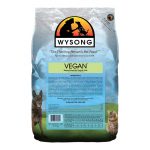
1 food in our catalog lists it, highest on the label first.
Sources
What we read
Checked October 1, 2026.
- 1 Safety and efficacy of a feed additive consisting of l-lysine monohydrochloride produced with Corynebacterium glutamicum CGMCC 7.453 for all animal species (Eppen Europa SAS)
- 2 Safety and efficacy of L-lysine monohydrochloride and concentrated liquid L-lysine (base) produced by fermentation using Corynebacterium glutamicum strain NRRL B-50775 for all animal species based on a dossier submitted by ADM
- 3 Lysine and other amino acids for feed: production and contribution to protein utilization in animal feeding
- 4 Reactive lysine content in commercially available pet foods
- 5 The Maillard reaction and pet food processing: effects on nutritive value and pet health
- 6 Lysine requirements of the immature dog
- 7 Antagonism of arginine by excess dietary lysine in the growing dog
- 8 Lysine supplementation is not effective for the prevention or treatment of feline herpesvirus 1 infection in cats: a systematic review
- 9 Maize grain
- 10 Crosslinking of collagen fibrils