
Ingredient file // Fat or oil
Flax
A real plant omega-3, but no fish oil
Flax is the small oilseed also sold as linseed, roughly a third fat by dry weight. It gives dogs ALA, a plant omega-3, plus some fiber, but dogs turn very little ALA into the EPA and DHA that fish oil supplies.
Role in the food Supporting nutrient- What it is
- The small, oily seed of the flax plant, also sold as linseed, added to food whole or ground.
- Made from
- Seeds of flax varieties grown for oil
- Main job
- Plant omega-3 and fat
- Typical amount
- Not published for dogs; a cat trial added 2.6%
- Watch for
- It does not stand in for fish oil
- Not the same as
- Linseed meal or flaxseed oil
Straight answer
Is Flax safe for dogs?
Count it as fat, not as fish oil
Wherever flax sits in the list, read it as a modest source of fat and ALA, the plant omega-3. Dogs turn little ALA into EPA and DHA. If you want omega-3 for skin, coat or joints, look for fish, salmon or krill oil on the same label, not more flax.
- Why it is in the food
- Plant omega-3 and fat
- How common
- Listed by 16 of the 3,204 foods we track
Our read // In our catalog
In 1 of every 200 foods we track
Share of foods that list it
<1%
16 of the 3,204 foods with an ingredient list on file, from 2 brands. 6 freeze-dried dog food, 6 dog food topper, 4 dry dog food.
Each square is 1% of the catalog
Where it sits on the label
Median position 3. In the top five of 12 foods, so it is usually a main ingredient.
Price per lb
Median of the cheapest bag price across 7 priced foods, 157% above the catalog. The price is the food's, not the ingredient's.
Who leans on it
75%
of the foods that list it are from Grandma Lucy's. 2 brands use it in total.
What it is
How it is made
Flax is grown for fiber or for oil, and linseed comes from the oil varieties. Crushing it yields industrial oil and linseed meal, a livestock protein feed. World production reached 2 million tonnes in 2012.1,2
- 01 // Source Oilseed flax Linseed comes from flax bred for oil, grown mainly in Canada, Russia, China, Kazakhstan and the US.
- 02 // Process Harvested dry The seed is threshed and stored dry, at about 91.5% dry matter.
- 03 // Process Milled or left whole Grinding frees the oil. Teeth do not crush whole seeds thoroughly, so much of an unground seed passes through.
- 04 // Output Flaxseed Whole or ground seed, about 37% fat and 24% protein dry, with over half its oil as ALA.
What is in it
Composition, dry matter
37
% fat
The average fat in dry flaxseed. It is an oilseed first, and more than half of that oil is ALA, the plant omega-3.
Why it is in the bag
Added for fat and a plant omega-3
- Main nutrition
- Supporting nutrient
- Does a job
- Mostly filler
Makers add flax for its oil. Dry flaxseed is about 37% fat, and about 56% of that oil is ALA, the plant omega-3, so one ingredient brings calories and a fatty acid together. The limit: in a dog trial, flaxseed oil lowered EPA and DHA, so it does not replace fish oil.2,5
-
01
A plant omega-3
Flax oil is about 56% ALA. In dogs, flax raised blood ALA within a month, but very little of it became EPA or DHA.2,3,5
-
02
Fat and calories
At about 37% fat, flax holds 27.1 MJ of gross energy per kg of dry matter, so a small amount adds real calories along with its omega-3.2
-
03
Some fiber and mucilage
Flax is about 22% NDF fiber and 2 to 7% mucilage, a gel-forming fiber. In dogs, that gel softened stool and trimmed fat digestion slightly.1,2,6
-
04
A commodity oilseed
Flax is a global crop, about 2 million tonnes in 2012 with Canada a leading grower, so it is an easy omega-3 to buy at scale.1
How much No dog kibble level is published; a 28-day cat trial added 2.6% ground flaxseed with no change in digestibility or stool.7
Our read // The claims
What the evidence supports
Strong: controlled studies in dogs agree. Some: small or mixed dog data. Thin: mechanism or lab work only. None: nothing, or the evidence points the other way.
-
Brands say
Flax omega-3s give dogs a better skin and coat
Outruns the evidence
Evidence
- Strong
- Some
- Thin
- None
In an 18-dog trial, flax and sunflower seed both gave a numerical coat gain that faded after 28 days. A 30-dog trial found flax oil no different from canola or camelina oil. Neither trial had an untreated group, so no flax-specific benefit is shown.3,4
-
Brands say
Flax lignans help protect against cancer
Outruns the evidence
Evidence
- Strong
- Some
- Thin
- None
Flax is the richest source of the lignan SDG, and a 1998 review gathered anticancer effects from rodent and human studies. It reports no dog data, so selling flax as cancer protection for dogs runs well past that evidence.1,9
-
Owners say
Flax does the same job as fish oil
Outruns the evidence
Evidence
- Strong
- Some
- Thin
- None
In a 6-week trial of 20 huskies, flaxseed oil dropped the omega-3 index from 1.6% to 0.96%, while krill oil raised it to 2.7%. The krill oil maker funded and ran the study.5
-
Brands say
Flax fiber supports healthy digestion
Outruns the evidence
Evidence
- Strong
- Some
- Thin
- None
In an 11-dog trial of flax mucilage, a concentrated extract, fat digestibility fell from 96.9% to 94.5% and fecal scores moved from ideal toward loose. The authors called the poorer stool a limit on use, not a benefit.6
-
Owners say
Flax contains cyanide, so it is unsafe
Outruns the evidence
Evidence
- Strong
- Some
- Thin
- None
Flax does carry cyanide-forming compounds, and the EU caps linseed at 150 to 250 mg/kg. Warmth and moisture release cyanide, but high heat destroys the releasing enzyme, and kibble is cooked hot.1,8
Straight answers
What owners ask
-
Q01
Is it just filler?
NoDry flax is about 37% fat and 24% protein, with real fiber besides. It supplies calories and an omega-3. The fair complaint is that it is a weak omega-3 source for dogs, not an empty ingredient.2,5
-
Q02
Does flax need to be ground?
Yes, for toppersTeeth do not crush whole seeds well, so much of the oil passes straight through. Grinding fixes that but also makes the cyanide-forming compounds easier to absorb, so keep home portions small.1,8
-
Q03
Is flaxseed oil the same thing?
Not quiteThe oil carries the ALA, about 56% of its fatty acids, without the seed's fiber and protein. Both share the same limit: in a dog trial, flaxseed oil did not raise EPA or DHA.2,5
Who uses it
Brands, best sellers and the company it keeps
Top brands, by foods that list it
Foods that list it / all the brand's recipes we track.
Usually listed with, share of the foods that list it
- Carrots 69%
- Cranberries 50%
- Pumpkin 44%
- Blueberries 38%
- Celery 31%
- Apples 31%
- Bananas 31%
- Eggshell Powder 31%
- Coconut 31%
- Oats 25%
- Turmeric 25%
- Ginger 25%
On the shelf
Foods that list Flax
16 foods in our catalog list it, highest on the label first.
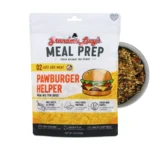 Grandma Lucy'sGrandma Lucy’s Meal Prep Pawburger Helper Dog Food Topper
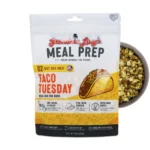 Grandma Lucy'sGrandma Lucy’s Meal Prep Taco Tuesday Dog Food Topper
 HorizonHorizon Amicus Grain-Free All Life Stages Salmon Formula Dry Dog Food
 HorizonHorizon Amicus Grain-Free All Life Stages Chicken Formula Dry Dog Food
Show 12 more
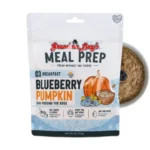 Grandma Lucy'sGrandma Lucy’s Meal Prep Blueberry Pumpkin Chia Seed Pudding Dog Food Topper
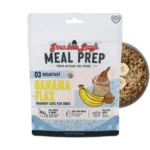 Grandma Lucy'sGrandma Lucy’s Meal Prep Banana Flax Overnight Oats Dog Food Topper
 Grandma Lucy'sGrandma Lucy’s Pureformance Pre-Mix Grain-Free Dog Food Topper
 Grandma Lucy'sGrandma Lucy’s - Pureformance Fish Freeze-Dried Dog Food
 Grandma Lucy'sGrandma Lucy’s - Pureformance Chicken Freeze-Dried Dog Food
 Grandma Lucy'sGrandma Lucy’s - Artisan Pork Grain-Free Freeze-Dried Dog Food
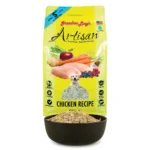 Grandma Lucy'sGrandma Lucy’s - Artisan Chicken Grain-Free Freeze-Dried Dog Food
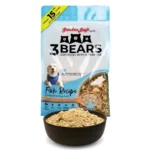 Grandma Lucy'sGrandma Lucy’s 3 Bears Fish Freeze-Dried Dog Food
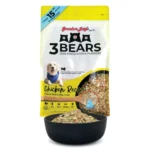 Grandma Lucy'sGrandma Lucy’s 3 Bears Chicken Freeze-Dried Dog Food
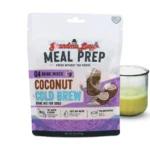 Grandma Lucy'sGrandma Lucy’s Meal Prep Coconut Cold Brew Dog Food Topper
 HorizonHorizon Amicus Grain-Free All Life Stages Lamb Formula Dry Dog Food
 HorizonHorizon Amicus Grain-Free Adult Tri-Protein Formula Dry Dog Food
Sources
What we read
Checked October 1, 2026.
- 1 Linseeds
- 2 Linseeds: nutritional tables
- 3 Effects of dietary flax seed and sunflower seed supplementation on normal canine serum polyunsaturated fatty acids and skin and hair coat condition scores
- 4 Effects of dietary camelina, flaxseed, and canola oil supplementation on inflammatory and oxidative markers, transepidermal water loss, and coat quality in healthy adult dogs
- 5 Enhanced omega-3 index after long- versus short-chain omega-3 fatty acid supplementation in dogs
- 6 Dietary supplementation with flaxseed mucilage alone or in combination with calcium in dogs: effects on apparent digestibility of fat and energy and fecal characteristics
- 7 Dietary Ground Flaxseed Increases Serum Alpha-Linolenic Acid Concentrations in Adult Cats
- 8 Commission Regulation (EU) 2022/1364 amending Regulation (EC) No 1881/2006 as regards maximum levels of hydrocyanic acid in certain foodstuffs
- 9 Experimental studies on lignans and cancer