
Ingredient file // Animal protein
Whole Mackerel
Real fatty fish, but the bag hides how much
Whole mackerel is the entire fish, with its head, bones, skin and organs along with the flesh. It brings animal protein, fish fat carrying EPA and DHA, and bone minerals, but most of its weight on the label is water.
Role in the food Supporting nutrient- What it is
- The entire mackerel, head, frame, skin and organs included, added as raw fish rather than dried into a meal.
- Made from
- Whole mackerel, a small fatty ocean fish
- Main job
- Animal protein and fish fat
- Typical amount
- Not published
- Watch for
- King mackerel carries far more mercury than Atlantic
- Not the same as
- Mackerel meal
Straight answer
Is Whole Mackerel safe for dogs?
Count it as wet fish, then find the omega-3
Whole mackerel first is a fair sign, but much of that weight is water. Look at the dry protein just behind it, such as a fish meal or chicken meal. Then look for an EPA plus DHA figure on the bag or the brand's site. Without one, treat the omega-3 promise as unverified.
- Why it is in the food
- Animal protein and fish fat
- How common
- Listed by 2 of the 3,204 foods we track
Our read // In our catalog
In 1 of every 1,602 foods we track
Share of foods that list it
<1%
2 of the 3,204 foods with an ingredient list on file, from 2 brands. All dry dog food.
Each square is 1% of the catalog
Where it sits on the label
Median position 1.5. In the top five of 2 foods, so it is usually a main ingredient.
Price per lb
Median of the cheapest bag price across 2 priced foods, 99% above the catalog. The price is the food's, not the ingredient's.
Who leans on it
50%
of the foods that list it are from Acana. 2 brands use it in total.
What it is
How it is made
Mackerel is a fatty schooling fish sold for human food and canning. A recipe that lists it whole skips the filleting, so the head, bones, skin and organs go in with the flesh.3,8,9,10
- 01 // Source Whole mackerel A fatty fish whose flesh runs 60 to 74% water and 1 to 23.5% fat, depending on the season.
- 02 // Process Kept cold Freshness is the main quality control, because histamine in fish ingredients depends on how fresh the raw fish was.
- 03 // Process Used whole Bones, skin and organs stay in, so the fish brings more ash and bone minerals than fillet alone.
- 04 // Output Wet fish ingredient Weighed into the recipe raw, so it ranks on the label by its weight with the water still in.
What is in it
Composition, as fed
1-23.5
% fat
Fat in raw mackerel flesh across the year. The omega-3 travels with the fat, so a lean spring fish carries a fraction of an autumn one's.
Why it is in the bag
Real fish protein and omega-3, mostly water by weight
- Main nutrition
- Supporting nutrient
- Does a job
- Mostly filler
Whole mackerel adds animal protein, calories and fish fat with EPA and DHA: autumn fish carry 1.7 g EPA and 2.8 g DHA per 100 g. It goes in wet, at 60 to 74% water, and labels rank by weight, so even when it is listed first, a fish meal below it can still add more dry protein. No source publishes how much mackerel a food holds.1,3,10
-
01
Protein and fat together
Mackerel flesh is 16 to 20% protein with 1 to 23.5% fat, so one ingredient adds animal protein and calories at once.3
-
02
EPA and DHA from fish
Fatty fish carry long-chain omega-3s. Autumn Norwegian mackerel held 4.5 g EPA plus DHA per 100 g; spring fish held 0.7 g.1,2
-
03
A higher spot on the list
Labels rank ingredients by weight, and mackerel flesh is 60 to 74% water. Fresh fish therefore lands higher than the dry protein it leaves after cooking.3,10
-
04
A protein beyond beef and chicken
Fish triggered reactions in only 5 of 297 food-allergic dogs, far fewer than 102 for beef or 45 for chicken, making it one of the rarer recorded canine food allergens.7
How much No source publishes how much whole mackerel a kibble holds. Dog arthritis trials used foods with 0.8% EPA plus DHA and higher.6
Our read // The claims
What the evidence supports
Strong: controlled studies in dogs agree. Some: small or mixed dog data. Thin: mechanism or lab work only. None: nothing, or the evidence points the other way.
-
Brands say
Fish omega-3s ease arthritis in dogs
Outruns the evidence
Evidence
- Strong
- Some
- Thin
- None
In a 38-dog controlled trial, a fish-oil food improved weight bearing in 82% of dogs against 38% on control. Those foods were dosed with fish oil; mackerel in kibble brings an unstated, season-dependent amount.1,2,5
-
Brands say
Whole fish keeps the bone minerals and vitamin D
Outruns the evidence
Evidence
- Strong
- Some
- Thin
- None
Bone does add ash and calcium: bony fish meals ran about 90 g calcium per kg dry. Mackerel flesh is rich in vitamin D, 5.7 to 7 micrograms per 100 g, but no study shows whole fish lifting a finished kibble's vitamin D.1,2,9
-
Brands say
Whole mackerel first means a fish-based food
Outruns the evidence
Evidence
- Strong
- Some
- Thin
- None
Labels rank by raw weight, and mackerel flesh is 60 to 74% water. Most of that weight leaves in cooking, so meals and starches listed below it can outweigh it in the finished kibble.3,10
-
Owners say
Fish is safe for dogs with food allergies
Outruns the evidence
Evidence
- Strong
- Some
- Thin
- None
Fish caused reactions in just 5 of 297 food-allergic dogs, about 2%, against 34% for beef. The authors caution such counts may just reflect feeding habits of recent decades, not a trait of the food, and a dog already sensitized to fish will still react.7
-
Owners say
Mackerel is too high in mercury for dogs
Outruns the evidence
Evidence
- Strong
- Some
- Thin
- None
FDA testing put Atlantic mackerel at 0.05 ppm mercury on average, among the lower fish. King mackerel, a larger species, averaged 0.73 ppm. The fear belongs to king mackerel, not mackerel in general.4
Straight answers
What owners ask
-
Q01
Is whole mackerel better than mackerel meal?
Not by weightMeal is fish with the water and some fat cooked out, about 68 to 75% protein dry for standard grades. Fresh fish is 16 to 20% protein as weighed. Pound for pound on the list, meal carries more.3,9
-
Q02
Is mackerel high in mercury?
Atlantic, noIn FDA data, Atlantic mackerel averaged 0.05 ppm and Pacific chub 0.088 ppm, while king mackerel averaged 0.73 ppm. If the brand names Atlantic or Pacific mackerel, mercury is not a reason to avoid it.4
-
Q03
Do I still need a fish oil supplement?
Depends on goalFor arthritis, dog trials started from foods with 0.8% EPA plus DHA and saw clearer gains at 3 times that. If the bag does not state its EPA plus DHA, ask the brand for the number.6
Who uses it
Brands, best sellers and the company it keeps
Top brands, by foods that list it
Foods that list it / all the brand's recipes we track.
Usually listed with, share of the foods that list it
- Whole Herring 50%
- Redfish 50%
- Silver Hake 50%
- Mackerel Meal 50%
- Herring Meal 50%
- Sunflower Oil 50%
- Red Lentils 50%
- Pollock Meal 50%
- Whitefish Meal 50%
- Whole Pilchard 50%
- Whole Hake 50%
- Flounder 50%
On the shelf
Foods that list Whole Mackerel
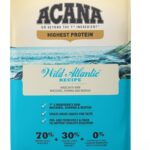
2 foods in our catalog list it, highest on the label first.

Sources
What we read
Checked October 1, 2026.
- 1 Mackerel, August - December, raw
- 2 Mackerel, February - June, raw
- 3 The Composition of Fish (Torry Advisory Note No. 38)
- 4 Mercury Levels in Commercial Fish and Shellfish (1990-2012)
- 5 Evaluation of the effects of dietary supplementation with fish oil omega-3 fatty acids on weight bearing in dogs with osteoarthritis
- 6 Dose-titration effects of fish oil in osteoarthritic dogs
- 7 Critically appraised topic on adverse food reactions of companion animals (2): common food allergen sources in dogs and cats
- 8 Histamine in Pet Food
- 9 Fish meal
- 10 What's in the Ingredients List?
- 11 Seasonal and geographical variation in chemical composition and lipid stability of Atlantic mackerel (Scomber scombrus) caught in Icelandic waters