
Ingredient file // Animal protein
Poultry
Real bird meat, with the species left off
Poultry is the flesh and skin of domestic birds, sometimes with bone, from a species the label does not name. It is a digestible source of animal protein and fat. The real gap is not knowing which bird.
Role in the food Main nutrition- What it is
- Clean flesh and skin from chicken, turkey or other domestic birds, with or without bone, species unnamed.
- Made from
- Whole carcasses or parts of domestic birds
- Main job
- Animal protein and fat
- Typical amount
- Not published
- Watch for
- Dogs allergic to chicken or turkey
- Not the same as
- Poultry by-products or poultry meal
Straight answer
Is Poultry safe for dogs?
Fine as meat, unusable for allergic dogs
High on a wet food list, poultry is raw meat weighed with its own water, about two-thirds of its weight. For most dogs it is a decent animal protein, and the missing species makes no difference. For a dog with a chicken or turkey allergy, skip any food that lists unnamed poultry.
- Why it is in the food
- Animal protein and fat
- Watch for
- Dogs allergic to chicken or turkey
- How common
- Listed by 1 of the 3,204 foods we track
Our read // In our catalog
In 1 of every 3,204 foods we track
Share of foods that list it
<1%
1 of the 3,204 foods with an ingredient list on file, from 1 brand. All wet dog food.
Each square is 1% of the catalog
Where it sits on the label
Median position 3. In the top five of 1 food, so it is usually a main ingredient.
Above the salt
Almost always listed before the salt, so there is more of it than a pinch.
Who leans on it
100%
of the foods that list it are from Purina. 1 brand use it in total.
What it is
How it is made
Poultry is the clean flesh and skin of slaughtered birds, from whole carcasses or parts. AAFCO says it often means the less profitable parts, such as backs and necks. Unlike poultry meal, it is not rendered.1,2,3,4,6
- 01 // Source Bird carcasses or parts Flesh and skin from chicken, turkey or other poultry, bone optional. Feathers, heads, feet and entrails are excluded.
- 02 // Process Kept raw Unlike chicken meal, it is not rendered. The sample in one ingredient study arrived frozen from a fresh pet food maker.
- 03 // Process Sealed and retorted Wet food in sealed cans is heated until commercially sterile, a federal canning standard that also covers pet food processors.
- 04 // Output Fresh poultry Raw meat that is about 66 to 73% water, listed on the label by that wet weight.
What is in it
Composition, dry matter
66
% water
This is raw chicken meat and skin as weighed, per USDA. Turkey runs about 73%. All of that water counts toward its place on the ingredient list.
Why it is in the bag
Real meat, and a main protein source here
- Main nutrition
- Supporting nutrient
- Does a job
- Mostly filler
Poultry is muscle and skin, and in wet food it often sits near the top of the list. One tested raw chicken sample was about 42% protein and 52% fat on a dry basis. AAFCO says it often comes from cheaper cuts like backs and necks, which keeps cost down. It is weighed wet, though, at about 66% water, so its rank overstates its share of the dry food.1,2,3
-
01
Animal protein and fat
On a dry basis, raw chicken was about 42% protein and 52% fat. In rooster assays its lysine was 87% digestible and its methionine 93%.2
-
02
Uses the cheaper cuts
AAFCO says poultry often consists of the less profitable parts of the bird, such as backs and necks. It is still flesh and skin, so a cheaper cut is not a lower class of ingredient.1
-
03
Moisture for wet food
Fresh meat brings its own water, about two-thirds of its weight. That suits a canned food, which is mostly water anyway, and costs nothing to remove.3
How much No source publishes a typical share. It is weighed wet, so its place on the list overstates how much of the dry food it supplies.1,3
Our read // The claims
What the evidence supports
Strong: controlled studies in dogs agree. Some: small or mixed dog data. Thin: mechanism or lab work only. None: nothing, or the evidence points the other way.
-
Brands say
Real poultry is a high-quality protein
Evidence
- Strong
- Some
- Thin
- None
In cecectomized rooster assays, raw chicken's lysine was 87% digestible and its methionine 93%, beating rendered chicken meal. That is bird data on one chicken sample, and the label does not say which species you get.2
-
Brands say
Fresh-meat foods digest better than kibble
Outruns the evidence
Evidence
- Strong
- Some
- Thin
- None
In a 12-beagle trial funded by a fresh food company, a fresh chicken diet cut fecal dry matter from 47 to 24 g a day compared with kibble. The trial compared whole diets, not the meat ingredient.7
-
Brands say
Poultry listed first means a mostly meat food
Outruns the evidence
Evidence
- Strong
- Some
- Thin
- None
The list is ordered by weight as added, and raw chicken is 66% water, turkey about 73%. First place means the most wet weight went in. It does not mean most of the dry food is meat.1,3,4
-
Owners say
Chicken and poultry are common allergens
Evidence
- Strong
- Some
- Thin
- None
Chicken was the trigger in 45 of 297 dogs with proven food reactions, behind beef and dairy. The authors warn the counts mostly mirror what dogs were fed, and turkey was not reported separately.5
-
Critics say
Unnamed poultry is mystery meat
Outruns the evidence
Evidence
- Strong
- Some
- Thin
- None
The ingredient has a fixed meaning: flesh and skin, with or without bone, and no feathers, heads, feet or entrails. What it hides is the species. That matters for allergies, not for quality.1
Straight answers
What owners ask
-
Q01
Which bird is it?
Not statedUsually chicken or turkey, but the label does not have to say. AAFCO lets makers use the species name without requiring it, so you cannot tell from the bag.1
-
Q02
Is it the same as poultry by-products?
NoPoultry is flesh and skin, and it leaves out heads, feet and entrails. Poultry by-products are those other parts, including organs like liver and gizzard, and they are listed under their own name.1
-
Q03
Does a beef-named food skip poultry?
Not alwaysA food called a beef dinner only needs beef to make up 25% of the product, not counting added water. The rest can include poultry, so read the ingredient list, not the front of the can.8
-
Q04
Is it just filler?
NoIt is muscle and skin. One tested sample was about 42% protein and 52% fat on a dry basis, and its amino acids digested well. Filler would supply neither.2
Who uses it
Brands, best sellers and the company it keeps
Top brands, by foods that list it
Foods that list it / all the brand's recipes we track.
Usually listed with, share of the foods that list it
- Water 100%
- Beef 100%
- Wheat Gluten 100%
- Rice 100%
- Meat By-Products 100%
- Liver 100%
- Corn Starch-Modified 100%
- Tricalcium Phosphate 100%
- Minerals 100%
- Potassium Chloride 100%
- Zinc Sulfate 100%
- Ferrous Sulfate 100%
On the shelf
Foods that list Poultry
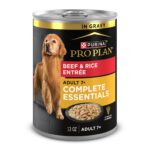
1 food in our catalog lists it, highest on the label first.
Sources
What we read
Checked October 1, 2026.
- 1 What's in the Ingredients List?
- 2 Chemical composition, true nutrient digestibility, and true metabolizable energy of chicken-based ingredients differing by processing method using the precision-fed cecectomized rooster assay
- 3 Chicken, broilers or fryers, meat and skin, raw (USDA FoodData Central SR Legacy, FDC 171447)
- 4 Turkey, whole, meat and skin, raw (USDA FoodData Central SR Legacy, FDC 171081)
- 5 Critically appraised topic on adverse food reactions of companion animals (2): common food allergen sources in dogs and cats
- 6 21 CFR 113.3 Definitions (Thermally processed low-acid foods packaged in hermetically sealed containers)
- 7 Apparent total tract nutrient digestibility and metabolizable energy estimation in commercial fresh and extruded dry kibble dog foods
- 8 Reading Labels