
Ingredient file // Other
Dried Rhizopus Oryzae Fermentation Product
An enzyme source with unproven digestion benefits
This is dried material from a Rhizopus oryzae fermentation, added as a source of digestive enzymes. A supplement containing it reports lipase activity, but no dog trial has shown that this ingredient improves digestion in finished kibble.
- What it is
- Dried fermentation material containing the growing medium and substances produced by Rhizopus oryzae.
- Made from
- Rhizopus oryzae and its growth medium
- Main job
- Source of digestive enzymes
- Typical amount
- Not published for finished dog food
- Watch for
- Digestion claims without ingredient-specific dog trials
- Not the same as
- Live probiotic culture
Straight answer
Is Dried Rhizopus Oryzae Fermentation Product safe for dogs?
Treat it as a minor enzyme addition
Read its position on the bag: near the end, it contributes little weight to the recipe. Check the main ingredients and the food's nutritional adequacy first. The Rhizopus line identifies an enzyme source, but it gives no reason to expect better digestion or pay more for the food.
- Why it is in the food
- Source of digestive enzymes
- Watch for
- Dogs with pancreatic insufficiency
- How common
- Listed by 20 of the 3,204 foods we track
Our read // In our catalog
In 1 of every 160 foods we track
Share of foods that list it
<1%
20 of the 3,204 foods with an ingredient list on file, from 2 brands. All dry dog food.
Each square is 1% of the catalog
Where it sits on the label
Median position 56. In the top five of 0 foods, so it is usually a minor ingredient.
Above the salt
Usually listed after the salt, which caps it at roughly 1% of the recipe in 100% of foods.
Price per lb
Median of the cheapest bag price across 11 priced foods, 14% below the catalog. The price is the food's, not the ingredient's.
Who leans on it
75%
of the foods that list it are from Holistic Select. 2 brands use it in total.
What it is
How it is made
Enzyme suppliers grow Rhizopus oryzae on a nutrient medium, then dry the fermented material for use in feed. The product includes the medium and fermentation substances; it is not an extracted enzyme alone.4,7
- 01 // Source Culture and medium The supplier grows Rhizopus oryzae on a nutrient medium selected for fermentation.
- 02 // Process Fermentation As the culture grows, it produces enzymes and other fermentation substances within the medium.
- 03 // Process Drying Water is removed from the fermented material, leaving the solids and soluble substances together.
- 04 // Output Dried product The food maker receives a dry enzyme source whose nutrient composition and activity in finished kibble are not disclosed.
What is in it
Composition, dry matter
41-58
% protein
The range of crude protein measured in dried Rhizopus oryzae biomass in one lab fermentation study, rising as the researchers added more nitrogen to the growth medium.
These numbers come from one lab study that dried Rhizopus oryzae biomass grown on stale bread at 50 degrees Celsius to constant weight. No source gives a full analysis for the commercial ingredient, which likely uses a different growth medium.8
Why it is in the bag
What the manufacturer gets
-
01
Adds enzyme activity
A supplement containing this ingredient guarantees lipase activity for the whole blend. That measures the supplement, not the Rhizopus material alone or the finished kibble.7
-
02
Supplies a dry additive
Drying lets a fermentation product be mixed into feed. The ingredient name does not tell an owner how much active enzyme remains after food manufacturing.4,7
-
03
Uses industrial fermentation
Rhizopus enzymes also serve commercial starch processing, showing this organizm is an industrial enzyme source. Published sources give no cost comparison for its use in dog food.6
How much No published kibble inclusion rate or dog trial dose isolates this exact Rhizopus product; a blended supplement gives serving directions instead.1,7
Our read // The claims
What the evidence supports
Strong: controlled studies in dogs agree. Some: small or mixed dog data. Thin: mechanism or lab work only. None: nothing, or the evidence points the other way.
-
Brands say
Adds lipase that breaks down dietary fat
Outruns the evidence
Evidence
- Strong
- Some
- Thin
- None
One supplement guarantees 210 lipase units per gram of its whole blend and names Rhizopus as the source. That shows activity in the powder, not how much this ingredient contributes or what remains active in kibble.7
-
Brands say
Improves nutrient absorption from ordinary kibble
Outruns the evidence
Evidence
- Strong
- Some
- Thin
- None
A company-authored laboratory model reported 18.7% higher dry matter digestibility with a different enzyme blend; it measured no dogs or absorption. A 14-dog trial of other enzyme supplements found no digestibility gain. Neither tested this ingredient.1,2
-
Owners say
Replaces digestive enzymes lost during cooking
Outruns the evidence
Evidence
- Strong
- Some
- Thin
- None
The cooking claim assumes healthy dogs need enzymes from food. In a 14-dog trial, plant and animal enzyme supplements added to a dry diet did not improve nutrient or energy digestibility.1
-
Owners say
Works like a live probiotic
Outruns the evidence
Evidence
- Strong
- Some
- Thin
- None
The supplement label assigns a live-cell guarantee of 100 million CFU to Bacillus coagulans, while Rhizopus is named as a lipase source. It gives no live-cell guarantee for the Rhizopus product.7
-
Owners say
Replaces pancreatic enzyme treatment
Outruns the evidence
Evidence
- Strong
- Some
- Thin
- None
A clinical trial measured pancreatic enzyme replacement in 11 dogs with diagnosed pancreatic insufficiency. It did not test this Rhizopus ingredient, whose presence on a food label provides no treatment dose.3,7
Straight answers
What owners ask
-
Q01
Is it just filler?
NoIt is added as an enzyme source, and a supplement containing it reports lipase activity. That gives it a manufacturing purpose, although no trial shows that this ingredient improves digestion in healthy dogs.1,7
-
Q02
Is it a probiotic?
NoThe label identifies Rhizopus as an enzyme source and gives a separate live-cell guarantee for Bacillus coagulans. The Rhizopus ingredient does not carry a probiotic count on that label.7
-
Q03
Will it treat poor digestion?
No proofThe healthy-dog enzyme trial found no digestibility gain, and it did not test this ingredient. Dogs with diagnosed pancreatic insufficiency need measured enzyme replacement; this ingredient line does not provide a treatment dose.1,3
-
Q04
Why is it near the end?
Small additionIngredient lists run from most to least by weight. An enzyme source near the end is a minor addition, so judge the food chiefly by its main ingredients and nutritional adequacy.5,7
Who uses it
Brands, best sellers and the company it keeps
Top brands, by foods that list it
Foods that list it / all the brand's recipes we track.
Usually listed with, share of the foods that list it
- Flaxseed 90%
- Chicken Fat 80%
- Peas 75%
- Dried Plain Beet Pulp 75%
- Chicken Meal 70%
- Mixed Tocopherols 60%
- Pumpkin 50%
- Pork Meal 40%
- Oatmeal 40%
- Rice 40%
- Chickpeas 40%
- Lentils 40%
On the shelf
Foods that list Dried Rhizopus Oryzae Fermentation Product
20 foods in our catalog list it, highest on the label first.
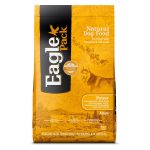 Eagle PackEagle Pack Power Adult Dry Dog Food
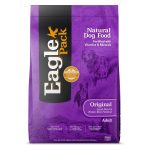 Eagle PackEagle Pack Original Lamb Meal & Brown Rice Formula Adult Dry Dog Food
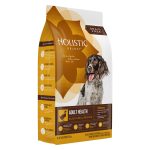 Holistic SelectHolistic Select Adult Health Grain-Free Duck Meal Recipe Dry Dog Food
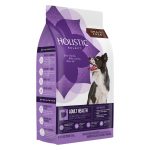 Holistic SelectHolistic Select Adult Health Grain-Free Deboned Turkey & Lentils Recipe Dry Dog Food
 Holistic SelectHolistic Select Adult Health Large & Giant Breed Dry Dog Food
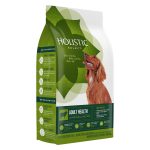 Holistic SelectHolistic Select Adult Health Lamb Meal Recipe Dry Dog Food
 Holistic SelectHolistic Select Weight Management Grain-Free Chicken Meal & Peas Recipe Dry Dog Food
Show 13 more
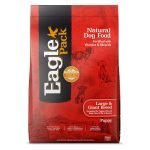 Eagle PackEagle Pack Large & Giant Breed Puppy Dry Dog Food
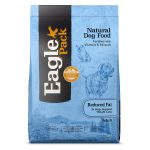 Eagle PackEagle Pack Reduced Fat Adult Dry Dog Food
 Eagle PackEagle Pack Original Chicken Meal & Pork Meal Formula All Life Stages Dry Dog Food
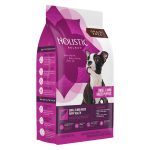 Holistic SelectHolistic Select Grain-Free Small & Mini Breed Puppy Health Dry Dog Food
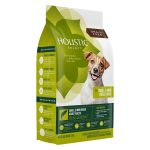 Holistic SelectHolistic Select Adult Health Small & Mini Breed Grain-Free Dry Dog Food
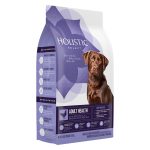 Holistic SelectHolistic Select Adult Health Chicken Meal & Brown Rice Recipe Dry Dog Food
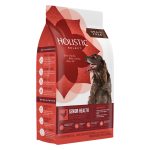 Holistic SelectHolistic Select Senior Health Grain-Free Chicken Meal & Lentils Recipe Dry Dog Food
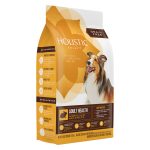 Holistic SelectHolistic Select Adult Health Grain-Free Rabbit & Lamb Meals Recipe Dry Dog Food
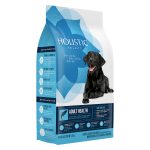 Holistic SelectHolistic Select Adult Health Anchovy & Sardine And Salmon Meal Recipe Dry Dog Food
 Holistic SelectHolistic Select Puppy Large & Giant Breed Grain-Free Dry Dog Food
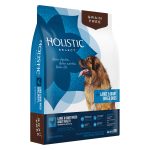 Holistic SelectHolistic Select Adult Large & Giant Breed Grain-Free Dry Dog Food
 Holistic SelectHolistic Select Adult & Puppy Health Grain-Free Salmon Anchovy & Sardine Meal Recipe Dry Dog Food
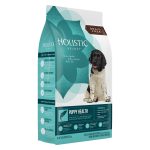 Holistic SelectHolistic Select Puppy Health Grain-Free Anchovy, Sardine & Chicken Meal Recipe Dry Dog Food
Sources
What we read
Checked October 1, 2026.
- 1 Effect of enzyme supplements on macronutrient digestibility by healthy adult dogs
- 2 Modulation of digestibility of canine food using enzyme supplement: an in vitro simulated semi-dynamic digestion study
- 3 Randomized placebo controlled clinical trial of an enteric coated micro-pelleted formulation of a pancreatic enzyme supplement in dogs with exocrine pancreatic insufficiency
- 4 Canadian Feed Ingredients Table (CFIT)
- 5 What's in the Ingredients List?
- 6 Enzyme Preparations Used in Food (Partial List)
- 7 Digestive Enzymes Pre & Probiotic Powder
- 8 Valorization of stale bread into protein-rich biomass: an optimized Rhizopus oryzae fermentation strategy and characterization study