
Ingredient file // Fruit or vegetable
Yellow Squash
A watery vegetable with modest nutrition claims
Yellow squash is tender summer squash used as a vegetable ingredient in dog food. Raw, it is mostly water and supplies a little fiber. Its presence does not prove a recipe will improve stool or immune health.
Role in the food Mostly filler- What it is
- Young yellow summer squash, harvested before the rind hardens, used as a vegetable ingredient in dog food.
- Made from
- Immature yellow summer squash
- Main job
- Vegetable matter and some fiber
- Typical amount
- Not published
- Watch for
- Unusually bitter garden squash
- Not the same as
- Pumpkin or winter squash
Straight answer
Is Yellow Squash safe for dogs?
Read squash as a small vegetable detail
The ingredient list ranks inputs by weight but does not give squash's percentage or delivery form. Read it alongside the main protein, fat and nutritional adequacy statement. Treat stool, immune and allergy promises tied to this vegetable as unproven.
- Why it is in the food
- Vegetable matter and some fiber
- How common
- Listed by 14 of the 3,204 foods we track
Our read // In our catalog
In 1 of every 229 foods we track
Share of foods that list it
<1%
14 of the 3,204 foods with an ingredient list on file, from 3 brands. 12 frozen dog food, 1 wet dog food, 1 dog food topper.
Each square is 1% of the catalog
Where it sits on the label
Median position 6. In the top five of 2 foods, so it is usually a supporting ingredient.
Above the salt
Almost always listed before the salt, so there is more of it than a pinch.
Price per lb
Median of the cheapest bag price across 2 priced foods, 175% above the catalog. The price is the food's, not the ingredient's.
Who leans on it
71%
of the foods that list it are from Instinct. 3 brands use it in total.
What it is
How it is made
Growers harvest yellow summer squash while the rind is soft. Squash is grown for fresh and processing markets. Washing and cutting prepare it for food use, but pet food labels do not disclose its delivery form.4,5,6,7
- 01 // Source Young yellow squash Crookneck and straightneck types are harvested immature, while their rinds are still soft.
- 02 // Process Washed and trimmed Food preparation starts by washing young squash, then trimming it before further handling.
- 03 // Process Cut for processing Processors slice or cut squash for products such as vegetable blends; frozen grades include both forms.
- 04 // Output Yellow squash The ingredient name identifies the vegetable, while the label leaves its delivery form and recipe amount undisclosed.
What is in it
Composition, dry matter
16
% total fiber
About this share of the raw vegetable's dry matter is dietary fiber. Fresh squash is mostly water, so a serving delivers little fiber.
Why it is in the bag
Likely a small vegetable extra, amount undisclosed
- Main nutrition
- Supporting nutrient
- Does a job
- Mostly filler
Brands do not publish how much squash they use or in what form. A University of Tennessee veterinary nutritionist says fruits and vegetables listed near salt are there to appeal to owners, not to feed the dog. Labels rank by weight, so squash higher on a list means more squash, but raw squash is about 94% water with just under 1 gram of fiber per 100 grams. Our judgment: its nutrient contribution is likely small, though amount and form are undisclosed.3,6,12
-
01
Adds low energy bulk
Raw squash is about 94% water and has 22 calories per 100 grams. Added in that form, it increases food weight with little energy.3
-
02
Contributes modest fiber
The raw fruit supplies just under 1 gram of dietary fiber per 100 grams. That is a real contribution, but the amount in a finished recipe is undisclosed.3,6
-
03
Uses an existing crop
US squash serves both fresh and processing markets. For manufacturers, that means an existing produce supply, although moving raw squash also means moving mostly water.3,5
How much The label gives no squash percentage, and the sources here do not report a usual inclusion rate for dog food.6
Our read // The claims
What the evidence supports
Strong: controlled studies in dogs agree. Some: small or mixed dog data. Thin: mechanism or lab work only. None: nothing, or the evidence points the other way.
-
Brands say
Yellow squash itself is low in calories
Evidence
- Strong
- Some
- Thin
- None
The raw fruit has 22 calories per 100 grams and is 94% water. That supports the claim about squash itself; it says nothing about the calorie density of the finished food.3
-
Brands say
Its fiber firms loose stools
Outruns the evidence
Evidence
- Strong
- Some
- Thin
- None
A 12-dog trial found different stool scores with beet pulp, cellulose and miscanthus, but did not test squash. Raw squash has under 1 gram of fiber per 100 grams, so a stool promise goes beyond the evidence.1,3
-
Brands say
Its vitamin C strengthens dog immunity
Outruns the evidence
Evidence
- Strong
- Some
- Thin
- None
Raw squash contains 17 milligrams of vitamin C per 100 grams. Dogs also make vitamin C in the liver, and the cited evidence reports no immune outcome from feeding yellow squash.3,8
-
Owners say
Yellow squash rarely causes allergy
Outruns the evidence
Evidence
- Strong
- Some
- Thin
- None
A review of 297 dogs with proven food reactions reported no squash cases, but its authors warn that those data cannot estimate each ingredient's true risk. No squash-specific allergy rate supports 'rarely'.2
Straight answers
What owners ask
-
Q01
Is it just filler?
Mostly waterIt adds vegetable matter and a little fiber, but raw squash contributes little energy or protein for its weight. Its presence is a minor recipe detail, not a reason to choose a food.3
-
Q02
Does it cure constipation?
No proofYellow squash contains fiber, but the raw fruit has under 1 gram per 100 grams. Dog trials show fiber sources differ in their stool effects; the cited trial did not include squash.1,3
-
Q03
Is it hypoallergenic?
No proofThe review of 297 dogs with food reactions did not identify squash as a trigger, yet it could not estimate the risk for foods that were rarely tested. An individual dog can still react to an ingredient.2
-
Q04
Is it safe for dogs?
Yes, plainPlain cooked yellow squash is generally safe in modest portions. For a home serving, cut it small, skip seasonings and introduce it gradually. Discard any squash that tastes unusually bitter.9,11
Who uses it
Brands, best sellers and the company it keeps
Top brands, by foods that list it
Foods that list it / all the brand's recipes we track.
Usually listed with, share of the foods that list it
- Carrots 79%
- Apples 64%
- Ground Miscanthus Grass 57%
- Montmorillonite Clay 43%
- Chicken 36%
- Chicken Liver 36%
- Chicken Heart 29%
- Beef 29%
- Beef Spleen 29%
- Beef Kidney 29%
- Beef Liver 29%
- Flaxseed 29%
On the shelf
Foods that list Yellow Squash
14 foods in our catalog list it, highest on the label first.
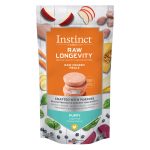 InstinctInstinct Raw Longevity Patties Cage-Free Chicken Recipe for Puppies Frozen Dog Food
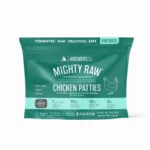 Answers Pet FoodAnswers Pet Food Detailed Mighty Raw Chicken Frozen Dog Food
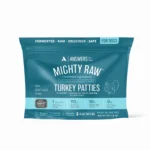 Answers Pet FoodAnswers Pet Food Detailed Mighty Raw Turkey Frozen Dog Food
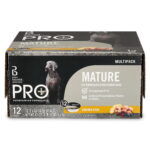 Pure BalancePure Balance Pro+ Mature Cup Wet Dog Food
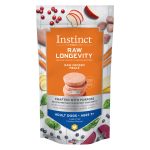 InstinctInstinct Raw Longevity Patties Cage-Free Chicken Recipe for Adults Ages 7+ Frozen Dog Food
Show 9 more
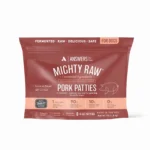 Answers Pet FoodAnswers Pet Food Detailed Mighty Raw Pork Frozen Dog Food
 InstinctInstinct Raw Longevity Patties Farm-Raised Rabbit Recipe Frozen Dog Food
 InstinctInstinct Raw Longevity Patties Grass-Fed Lamb Recipe Frozen Dog Food
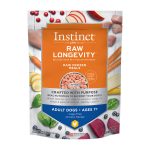 InstinctInstinct Raw Longevity Bites Cage-Free Chicken Recipe for Adults Ages 7+ Frozen Dog Food
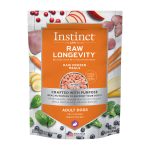 InstinctInstinct Raw Longevity Bites Farm-Raised Rabbit Recipe Frozen Dog Food
 InstinctInstinct Raw Longevity Patties Grass-Fed Beef & Wild-Caught Cod Recipe Frozen Dog Food
 InstinctInstinct Raw Longevity Patties Grass-Fed Beef Recipe Frozen Dog Food
 InstinctInstinct Raw Longevity Bites Grass-Fed Beef & Wild-Caught Cod Recipe Frozen Dog Food
 InstinctInstinct Raw Boost RawBoost+ Mixers Multivitamin Recipe Dog Food Topper
Sources
What we read
Checked October 1, 2026.
- 1 The effects on nutrient utilization and stool quality of Beagle dogs fed diets with beet pulp, cellulose, and Miscanthus grass
- 2 Critically appraised topic on adverse food reactions of companion animals (2): common food allergen sources in dogs and cats
- 3 Squash, summer, yellow, includes skin, raw
- 4 Inspection Instructions for Frozen Squash (Summer Type)
- 5 Vegetables 2025 Summary
- 6 Reading Labels
- 7 Preserving summer squash
- 8 Nutritional Requirements of Small Animals
- 9 Toxic squash syndrome: If it’s bitter, it’s not dinner
- 10 Pumpkins
- 11 Can Dogs Eat Squash?
- 12 Marketing the Meal