
Ingredient file // Grain
Whole Grain Rye
A useful starch grain without proven extra benefits
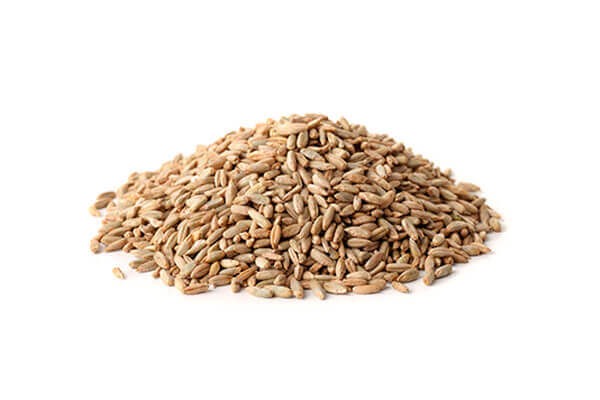
Whole grain rye keeps the bran and germ alongside the starchy center, even when ground into flour. In dog food it supplies carbohydrate energy and fiber. Small dog studies show changes in gut bacteria, but no proven health advantage.
- What it is
- Rye kernels used with their bran, germ and starchy center retained, whether whole or ground.
- Made from
- Harvested rye kernels
- Main job
- Carbohydrate for energy
- Typical amount
- Not published
- Watch for
- Ergot contamination in grain
- Not the same as
- Rye bran
Straight answer
Is Whole Grain Rye safe for dogs?
Read rye as starch within the recipe
If whole grain rye sits high on the list, check the main protein sources and the food's nutritional adequacy statement. Lower down, it is one carbohydrate among others. Choose by the complete recipe and how your dog does on it. Skip promises of slower energy or a healthier gut.
- Why it is in the food
- Carbohydrate for energy
- How common
- Listed by 10 of the 3,204 foods we track
Our read // In our catalog
In 1 of every 320 foods we track
Share of foods that list it
<1%
10 of the 3,204 foods with an ingredient list on file, from 1 brand. All dry dog food.
Each square is 1% of the catalog
Where it sits on the label
Median position 3. In the top five of 10 foods, so it is usually a main ingredient.
Above the salt
Almost always listed before the salt, so there is more of it than a pinch.
Price per lb
Median of the cheapest bag price across 3 priced foods, 8% above the catalog. The price is the food's, not the ingredient's.
Who leans on it
100%
of the foods that list it are from Horizon. 1 brand use it in total.
What it is
How it is made
Rye is grown for its grain and sold into food and feed markets. For whole grain rye, milling removes the inedible hull while keeping the bran, germ and starchy center together.9,10
- 01 // Source Rye kernels Mature grain is harvested from rye plants and delivered for grading and milling.
- 02 // Process Cleaned and graded Grain handlers remove foreign material and inspect rye samples for ergot and damaged kernels.
- 03 // Process Ground whole The inedible hull is removed; milling may reduce the kernel to flour while retaining bran and germ.
- 04 // Output Whole grain rye Whole kernels or whole rye flour arrive for mixing into the dog food recipe.
What is in it
Composition, dry matter
62
% starch
The average starch content of rye grain. Its main contribution to dog food is carbohydrate energy, alongside fiber from the whole kernel.
Why it is in the bag
What the manufacturer gets
-
01
Supplies carbohydrate energy
Starch makes up most of dry rye grain. In a cooked dog food, it supplies energy while the complete recipe supplies the dog's other nutrients.1,5
-
02
Fits extruded kibble
Dog researchers have made complete extruded diets with whole rye flour. The dry grain is milled and mixed with the recipe's other ingredients before cooking.1,2
-
03
Uses an existing feed crop
Rye already enters animal feed markets where it is grown. That gives manufacturers a cereal supply without requiring a crop grown solely for pet food.6
How much Dog trials tested 25% whole rye as fed in extruded food and 50% of diet dry matter in baked food.2,4
Our read // The claims
What the evidence supports
Strong: controlled studies in dogs agree. Some: small or mixed dog data. Thin: mechanism or lab work only. None: nothing, or the evidence points the other way.
-
Brands say
Whole rye gives dogs usable energy
Evidence
- Strong
- Some
- Thin
- None
Rye grain averages about 62% starch on a dry matter basis. A 21-dog trial fed a complete extruded food containing 30% rye, and fecal consistency was similar across the wheat, rye and triticale diets. It supplies carbohydrate energy, though the amount delivered depends on the finished recipe.1,5
-
Brands say
Rye works as well as wheat in kibble
Outruns the evidence
Evidence
- Strong
- Some
- Thin
- None
In a trial of 21 Golden Retrievers, the 18 dogs who completed the digestibility arm (6 per diet) showed significantly higher dry matter and organic matter digestibility with 30% rye than with wheat (P<0.05). A separate 6-dog trial at 50% rye found the opposite, with lower nutrient and energy digestibility than wheat or a rye-wheat mix, so the two small trials disagree.1,4
-
Brands say
Rye fiber improves a dog's gut health
Outruns the evidence
Evidence
- Strong
- Some
- Thin
- None
An 18-dog crossover trial found higher fecal acetate and propionate after rye than after oats. A separate 6-dog trial, where dogs ate wheat first then rye or a rye-wheat mix in sequence, found no significant difference in short-chain fatty acids, only a tendency (P<0.06) for higher acetic acid after rye. These are biomarker shifts, not a measured health outcome.3,4
-
Brands say
Whole rye provides slow-release energy
Outruns the evidence
Evidence
- Strong
- Some
- Thin
- None
An 18-dog crossover trial measured glucose and hormone responses after meals containing whole rye, oats or wheat. Rye and wheat produced broadly similar response curves. The trial did not measure energy-release rate or show a lasting energy benefit.2
-
Critics say
Rye is just filler
Outruns the evidence
Evidence
- Strong
- Some
- Thin
- None
Dry rye grain averages about 62% starch and contains fiber. Dogs ate experimental foods containing 30% rye. It has a clear recipe job, although supplying starch and fiber does not give it a special health benefit.1,5
Straight answers
What owners ask
-
Q01
Is it just filler?
NoRye contributes starch for energy and fiber that reaches the colon. Those are real jobs in dry food. Judge whether the finished food suits your dog by the complete recipe and your dog's response.5,6
-
Q02
Does whole mean intact kernels?
NoWhole rye may be ground into flour. The point is that its bran, germ and starchy center stay together. Grinding alone does not make it refined rye flour.10
-
Q03
Does list position reveal its amount?
Only partlyIngredients appear in order of weight, so rye near the top weighs more than ingredients below it. The list does not disclose its percentage or how much starch it contributes to the finished food.8
-
Q04
Should sensitive dogs avoid rye?
SometimesRye contains proteins relevant to gluten-sensitive enteropathy. A dog with that diagnosis needs a diet without rye. Digestive trouble alone does not identify rye as the cause.11
Who uses it
Brands, best sellers and the company it keeps
Top brands, by foods that list it
Foods that list it / all the brand's recipes we track.
Usually listed with, share of the foods that list it
- Flaxseed 90%
- Whole Grain Oats 80%
- Whole Grain Barley 70%
- Mixed Tocopherols 70%
- Chicken Meal 60%
- Chicken 60%
- Chicken Fat 60%
- Carrots 50%
- Egg Product 50%
- Canola Oil 40%
- Pea Fibre 40%
- Whole Grain Hulless Barley 30%
On the shelf
Foods that list Whole Grain Rye
10 foods in our catalog list it, highest on the label first.
 HorizonHorizon Taiga XL - Dry Dog Food
 HorizonHorizon Pulsar WG Salmon - Dry Dog Food
 HorizonHorizon Complete All Life Stages Whole Grain Chicken Formula Dry Dog Food
 HorizonHorizon Complete Whole Grain Senior Weight Management Chicken Formula Dry Dog Food
Show 6 more
 HorizonHorizon Taiga Whole Grain Pork Formula Dry Dog Food
 HorizonHorizon Pulsar Whole Grain Pork Formula Dry Dog Food
 HorizonHorizon Pulsar Whole Grain Chicken Formula Dry Dog Food
 HorizonHorizon Taiga Whole Grain Chicken Formula Dry Dog Food
 HorizonHorizon Complete Whole Grain Large Breed Puppy Chicken Formula Dry Dog Food
 HorizonHorizon Complete Whole Grain Large Breed Adult Chicken Formula Dry Dog Food
Sources
What we read
Checked October 1, 2026.
- 1 Effects of wheat, rye, and triticale grains on digestion, fecal quality, and health parameters in dogs
- 2 Metabolic and hormonal effects of whole grains of rye, oats and wheat in dog food
- 3 Effects of whole-grain cereals on fecal microbiota and short-chain fatty acids in dogs: a comparison of rye, oats and wheat
- 4 Effects of rye inclusion in dog food on fecal microbiota and short-chain fatty acids
- 5 Rye grain
- 6 Rye grain and by-products
- 7 Mycotoxins
- 8 Reading Labels
- 9 INSPECTING GRAIN: Practical Procedures for Grain Handlers
- 10 Types of Rye
- 11 Health
- 12 Biology, Genetics, and Management of Ergot (Claviceps spp.) in Rye, Sorghum, and Pearl Millet
- 13 Ergot Alkaloids in Feedstuff