
Ingredient file // Other
Dried Lactobacillus Lactis Fermentation Product
A culture ingredient without proven digestive benefits
This dried fermentation product is made by growing the bacterium now called Lactococcus lactis in a nutrient medium. It gives manufacturers a culture ingredient to list, but the name alone shows neither live bacteria nor a digestive benefit for dogs.
- What it is
- Dried material produced by growing Lactococcus lactis in a nutrient medium for use in animal food.
- Made from
- Lactococcus lactis culture and nutrient medium
- Main job
- Culture ingredient for digestive claims
- Typical amount
- Not published
- Watch for
- No strain or live count disclosed
- Not the same as
- Lactobacillus acidophilus
Straight answer
Is Dried Lactobacillus Lactis Fermentation Product safe for dogs?
Check the live guarantee before the promise
Read this as a minor culture addition when it appears near the end of an ingredient list. If the bag promises probiotic effects, look for a guaranteed live count and a named strain, then evidence for that finished product. The old ingredient wording supplies none of those details.
- Why it is in the food
- Culture ingredient for digestive claims
- Watch for
- Severely compromised immune systems
- How common
- Listed by 17 of the 3,204 foods we track
Our read // In our catalog
In 1 of every 188 foods we track
Share of foods that list it
<1%
17 of the 3,204 foods with an ingredient list on file, from 1 brand. 16 dry dog food, 1 freeze-dried dog food.
Each square is 1% of the catalog
Where it sits on the label
Median position 42. In the top five of 0 foods, so it is usually a minor ingredient.
Above the salt
Usually listed after the salt, which caps it at roughly 1% of the recipe in 100% of foods.
Price per lb
Median of the cheapest bag price across 7 priced foods, 25% below the catalog. The price is the food's, not the ingredient's.
Who leans on it
100%
of the foods that list it are from Wysong. 1 brand use it in total.
What it is
How it is made
Feed additive makers grow Lactococcus lactis on a nutrient medium, which yields bacterial cells plus fermentation substances. Drying turns that wet culture into a stable material that mixes into animal food.3,4
- 01 // Source Named culture Lactococcus lactis is the source bacterium; the ingredient name does not identify its strain.
- 02 // Process Grown in medium The culture grows in a nutrient medium and produces fermentation substances or other microbial products.
- 03 // Process Dried The cultured material is dried for use as a feed ingredient.
- 04 // Output Fermentation product The dry ingredient reaches the food maker without a nutrient profile or live count stated by its name.
What is in it
Composition, dry matter
45
% protein
Protein in lab-grown Lactococcus lactis cells by dry weight. It describes the bacterium, not the bag ingredient, which also holds dried growth medium.
Why it is in the bag
What the manufacturer gets
-
01
Adds a culture ingredient
Manufacturers list a named fermentation product alongside other microbial ingredients. That supports a digestive health message on the bag, but the listing alone does not show a benefit in dogs.4,7
-
02
Blends as a dry additive
Drying makes the cultured material practical to mix into a dry recipe. No opened source gives its price, production scale or typical share of a finished dog food.4,7
How much No opened source reports a typical recipe amount or a tested inclusion rate for this named ingredient in dog food.4,7
Our read // The claims
What the evidence supports
Strong: controlled studies in dogs agree. Some: small or mixed dog data. Thin: mechanism or lab work only. None: nothing, or the evidence points the other way.
-
Brands say
Its bacteria stay alive in the food
Outruns the evidence
Evidence
- Strong
- Some
- Thin
- None
A laboratory biscuit study recovered a Lactococcus lactis strain after 28 days of refrigerated storage. It tested a different preparation, and no dogs ate the biscuits. It cannot show a live count in shelf-stored kibble.2,5
-
Brands say
It restores healthy gut bacteria
Outruns the evidence
Evidence
- Strong
- Some
- Thin
- None
The cited 28-day biscuit study measured storage survival and simulated digestion, not gut bacteria, and fed no animals. It shows nothing about a dog's gut flora, so the claim has no supporting evidence.2
-
Brands say
It strengthens a dog's immune system
Outruns the evidence
Evidence
- Strong
- Some
- Thin
- None
In a placebo-controlled trial involving 24 dogs, heat-killed Lactococcus lactis H61 did not substantially change measured immune markers after 4 weeks. That preparation also differs from the ingredient named on the bag.1
Straight answers
What owners ask
-
Q01
Is it just filler?
No, but unprovenFiller would have no job, and this one has an intended job: adding a lactic acid culture. Whether it does that job in your dog's food is unshown, because the name gives no strain or live count.4,5
-
Q02
Does dried mean dead?
Not necessarilyDrying does not tell you whether bacteria survive in the finished food. Look for a live microorganizm guarantee; the ingredient name alone supplies no count for what remains alive in the bag.2,5
-
Q03
Why do the names differ?
Name changedAAFCO sunsetted the older Lactobacillus lactis ingredient name and added Lactococcus lactis. The revised name identifies the bacterium more accurately; it does not demonstrate a digestive benefit.3
Who uses it
Brands, best sellers and the company it keeps
Top brands, by foods that list it
Foods that list it / all the brand's recipes we track.
Usually listed with, share of the foods that list it
- Natural Flavor 71%
- Chicken 65%
- Chicken Fat 65%
- Mixed Tocopherols 65%
- Dried Plain Beet Pulp 59%
- Flaxseed 59%
- Turkey Meal 53%
- Chicken Meal 47%
- Peas 47%
- Brown Rice 47%
- Pea Protein 24%
- Calcium Carbonate 18%
On the shelf
Foods that list Dried Lactobacillus Lactis Fermentation Product
17 foods in our catalog list it, highest on the label first.
 WysongWysong Fundamentals Dry Dog Food
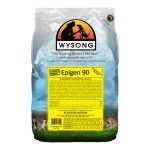 WysongWysong Epigen 90 Starch-Free Dry Dog Food
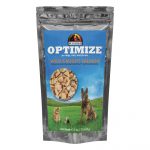 WysongWysong Optimize Wild Caught Salmon Grain-Free Dry Dog Food
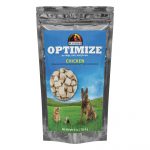 WysongWysong Optimize Chicken Dry Dog Food
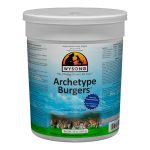 WysongWysong Archetype Burgers Freeze-Dried Raw Dog Food
 WysongWysong Epigen Starch-Free Grain-Free Dry Dog Food
 WysongWysong Anergen Dry Dog Food
 WysongWysong Optimal Performance Grain-Free Dry Dog Food
 WysongWysong Optimal Adult Grain-Free Dry Dog Food
Show 8 more
 WysongWysong Optimize Beef Heart & Liver Grain-Free Dry Dog Food
 WysongWysong Synorgon Dry Dog Food
 WysongWysong Adult Dry Dog Food
 WysongWysong Vegan Dry Dog Food
 WysongWysong Growth Dry Dog Food
 WysongWysong Senior Dry Dog Food
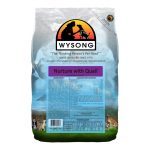 WysongWysong Nurture with Quail Dry Dog Food
 WysongWysong Optimal Senior Grain-Free Dry Dog Food
Sources
What we read
Checked October 1, 2026.
- 1 Effects of oral administration of Lactococcus lactis H61 on aging level of dog
- 2 Lactic acid bacteria, potentially probiotic, in whole-grain pet biscuits: survival and technological potential of millet-based formulations (Pennisetum glaucum)
- 3 Ingredient Definitions Committee Report
- 4 Official Names and Definitions of Feed Ingredients
- 5 CPG Sec. 689.100 Direct-Fed Microbial Products
- 6 The power of probiotics
- 7 GoodGut Dog AG Salmon Recipe Nutrient Profile
- 8 The Metabolic Network of Lactococcus lactis: Distribution of 14C-Labeled Substrates between Catabolic and Anabolic Pathways
- 9 Multi-omics approach to study the growth efficiency and amino acid metabolism in Lactococcus lactis at various specific growth rates