
Ingredient file // Animal protein
Hoki Fish
A lean, real fish protein, light on omega-3
Hoki is a New Zealand whitefish, caught by trawl and mostly sold as frozen fillets. In dog food it is lean animal protein, about 84% protein once dry, with a modest dose of omega-3 that falls well short of therapeutic levels.
Role in the food Main nutrition- What it is
- A lean whitefish from New Zealand's deep-water trawl fishery, used as a named animal protein in dog food.
- Made from
- Wild hoki from New Zealand waters
- Main job
- Lean animal protein
- Typical amount
- Not published
- Watch for
- Freeze-dried hoki is raw; handle it like raw meat
- Not the same as
- Hoki liver oil or fish meal
Straight answer
Is Hoki Fish safe for dogs?
Count it as lean fish protein, nothing more
Hoki on a label means real fish protein, but lean fish. Any omega-3 promise rests on a separate fish oil, so look for one. In a freeze-dried mix with beef and organs, it is one protein among several. Skip it for fish-allergic dogs, and handle freeze-dried food as raw.
- Why it is in the food
- Lean animal protein
- How common
- Listed by 1 of the 3,204 foods we track
Our read // In our catalog
In 1 of every 3,204 foods we track
Share of foods that list it
<1%
1 of the 3,204 foods with an ingredient list on file, from 1 brand. All freeze-dried dog food.
Each square is 1% of the catalog
Where it sits on the label
Median position 4. In the top five of 1 food, so it is usually a main ingredient.
Above the salt
Almost always listed before the salt, so there is more of it than a pinch.
Price per lb
Median of the cheapest bag price across 1 priced foods, 1011% above the catalog. The price is the food's, not the ingredient's.
Who leans on it
100%
of the foods that list it are from K9 Natural. 1 brand use it in total.
What it is
How it is made
Hoki is New Zealand's big whitefish fishery, about 101,000 tonnes in 2021, trawled mainly for fillets and fish fingers. Parts that do not become fillets go to fishmeal and fish oil.2,3,4,5
- 01 // Source Wild hoki Caught by midwater and bottom trawl around New Zealand, usually 200 to 700 m down.
- 02 // Process Filleted Most of the catch becomes fillets and fish-finger products exported to the US, EU, Japan and Australia.
- 03 // Process Leftovers rendered Leftover fish parts go to by-product plants that turn them into fishmeal and fish oil for animal feed.
- 04 // Process Freeze-dried For freeze-dried dog food, raw fish is frozen and its ice drawn off under vacuum, with no cooking step.
- 05 // Output Dried raw hoki Labels rarely say whether fillet, trim or whole fish went in, and that changes the bone and mineral content.
What is in it
Composition, dry matter
84
% protein
Protein in hoki fillet with its water removed. As sold it is about 79% water; what remains is mostly protein and about 10% fat.
Values are for frozen fillets. Fat swings most, 1.6 to 3.4% as sold, and drives the omega-3 range. Whole fish or frames would add bone, raising ash and calcium well above fillet levels.1
Why it is in the bag
A real protein source, not filler
- Main nutrition
- Supporting nutrient
- Does a job
- Mostly filler
Hoki is fish muscle: frozen fillet is about 18% protein and 79% water, so once dried it is mostly protein [1]. That makes it a protein source the food is built on. Labels rank ingredients by weight with water included [11], so a wet fish's dry share is likely smaller than its list spot suggests. Its omega-3, about 239 mg EPA plus DHA per 100 g, falls far short of the 50 to 220 mg per kg of body weight used therapeutically [1, 8].1,8,11
-
01
Lean animal protein
Frozen hoki fillet is about 18% protein and 2% fat as sold. Dried, that is roughly 84% protein, so it lifts protein without adding much fat.1
-
02
Some marine omega-3
It brings preformed EPA and DHA, about 239 mg per 100 g of fillet. That is a contribution to the diet, not a therapeutic dose.1,8
-
03
Large certified supply
The fishery landed about 101,000 tonnes of hoki in 2021 under an MSC certificate, so fish with a sustainability label is easy to source.3
How much No public source gives how much hoki a recipe holds, and no dog trial has fed hoki as a test ingredient.
Our read // The claims
What the evidence supports
Strong: controlled studies in dogs agree. Some: small or mixed dog data. Thin: mechanism or lab work only. None: nothing, or the evidence points the other way.
-
Brands say
Lean, high-protein fish
Evidence
- Strong
- Some
- Thin
- None
Plain arithmetic. Frozen hoki fillet tested at 17.8% protein and 2.2% fat as sold; with the water gone that is about 84% protein and 10% fat. The claim holds.1
-
Brands say
Sustainably caught, MSC-certified fish
Evidence
- Strong
- Some
- Thin
- None
Hoki was the first large whitefish fishery MSC certified, in 2001, and MSC reports both stocks have more than doubled since. The current certificate runs to 2031. A bag claim still depends on the supplier's chain of custody.2,3
-
Owners say
A novel protein for dogs with food allergies
Outruns the evidence
Evidence
- Strong
- Some
- Thin
- None
Fish caused reactions in 5 of 297 food-allergic dogs, against 102 for beef, which may reflect how rarely dogs were fed fish. It is novel only to a dog never fed fish, and a recipe that also holds beef is no elimination diet.6
-
Brands say
Fish omega-3s help skin, coat and joints
Outruns the evidence
Evidence
- Strong
- Some
- Thin
- None
Fish oil helps arthritic dogs at high doses: a 127-dog trial used food with 31 times the omega-3. Arthritis doses run up to 220 mg EPA and DHA per kg of body weight; a 20 kg dog would need about 1.8 kg of hoki fillet daily.1,8,9
Straight answers
What owners ask
-
Q01
Is it just filler?
NoHoki is fish muscle. Dried, a fillet is about 84% protein and 10% fat, the opposite of filler. Its job is to supply amino acids, and it does that job.1
-
Q02
Is freeze-dried hoki cooked?
NoFreeze-drying pulls water out of frozen food under vacuum without cooking it, so freeze-dried hoki is raw fish unless the label says it went through a heat or high-pressure step.
-
Q03
Is hoki rich in omega-3?
ModestlyHoki is a lean whitefish at about 2% fat as sold, carrying roughly 239 mg of EPA plus DHA per 100 g of fillet. Fatty fish and fish oil carry far more.1
Who uses it
Brands, best sellers and the company it keeps
Top brands, by foods that list it
Foods that list it / all the brand's recipes we track.
Usually listed with, share of the foods that list it
- Beef 100%
- Beef Heart 100%
- Beef Tripe 100%
- Beef Liver 100%
- Beef Lung 100%
- Sunflower Oil 100%
- Flaxseed Flakes 100%
- Carrots 100%
- New Zealand Green-Lipped Mussel 100%
On the shelf
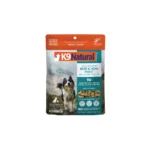
Foods that list Hoki Fish
1 food in our catalog lists it, highest on the label first.
Sources
What we read
Checked October 1, 2026.
- 1 HOKI de Nouvelle Zélande - Nutraqua - Composition nutritionnelle des produits aquatiques
- 2 New Zealand Hoki
- 3 New Zealand hake, hoki, ling and Southern blue whiting
- 4 Macruronus novaezelandiae, Blue grenadier
- 5 Our Operations
- 6 Critically appraised topic on adverse food reactions of companion animals (2): common food allergen sources in dogs and cats
- 7 Fish Allergy: Fishing for Novel Diagnostic and Therapeutic Options
- 8 Fish Oil Dosing in Pet Diets and Supplements
- 9 Multicenter veterinary practice assessment of the effects of omega-3 fatty acids on osteoarthritis in dogs
- 10 Get the Facts! Raw Pet Food Diets can be Dangerous to You and Your Pet
- 11 Pet food labels: Cracking the code (Proceedings)