
Ingredient file // Animal protein
Hydrolyzed Salmon
Pre-digested salmon protein, not a guaranteed allergy fix
Hydrolyzed salmon is salmon protein cut by enzymes into short peptides and dried to a powder. It is a near-pure protein that a dog's immune system recognizes less often, but less often is not never.
Role in the food Main nutrition- What it is
- Salmon protein cut by enzymes into short peptides, then dried into a powder that is almost pure protein.
- Made from
- Salmon heads, backbones and trimmings left from filleting
- Main job
- Digestible, low-allergen protein
- Typical amount
- 5% in one dog trial; the main protein in others
- Watch for
- Fish-allergic dogs still react to partial hydrolysates
- Not the same as
- Salmon meal or fresh salmon
Straight answer
Is Hydrolyzed Salmon safe for dogs?
Read it as protein, not an allergy promise
High on a list, hydrolyzed salmon means a near-pure protein made of short peptides. It makes a food hypoallergenic only when every other protein is hydrolyzed or new to your dog. In an everyday kibble beside fish meal and grains, count it as ordinary good protein. For an allergy trial, use a diet built around it.
- Why it is in the food
- Digestible, low-allergen protein
- How common
- Listed by 3 of the 3,204 foods we track
Our read // In our catalog
In 1 of every 1,068 foods we track
Share of foods that list it
<1%
3 of the 3,204 foods with an ingredient list on file, from 3 brands. All dry dog food.
Each square is 1% of the catalog
Where it sits on the label
Median position 3. In the top five of 3 foods, so it is usually a main ingredient.
Above the salt
Almost always listed before the salt, so there is more of it than a pinch.
Price per lb
Median of the cheapest bag price across 3 priced foods, 35% below the catalog. The price is the food's, not the ingredient's.
Who leans on it
33%
of the foods that list it are from Diamond Care. 3 brands use it in total.
What it is
How it is made
Fish plants fillet salmon and are left with heads, backbones and trimmings. Fish by-products worldwide are projected to reach 160.8 million tonnes by 2030, and enzyme hydrolysis turns their protein into a soluble, dry powder.1,2,7,9
- 01 // Source Heads and backbones Collected after farmed salmon are filleted, then ground. Both parts make a hydrolysate of similar protein content.
- 02 // Process Enzymes cut protein Ground fish is mixed 1:1 with water, held at 50°C with a protease for 60 minutes.
- 03 // Process Enzyme stopped Heating to 90°C for 10 minutes stops the enzyme. The oil is then separated from the watery protein.
- 04 // Process Filtered and dried The protein liquid is filtered and dried. One dog food study spray dried its fish hydrolysate at 130°C.
- 05 // Output Hydrolysate powder About 87 to 92% protein on a dry basis, mostly peptides under 4 kDa, under 20 amino acids long.
What is in it
Composition, dry matter
87-92
% protein
Protein in four lab-made salmon hydrolysates and one commercial batch, dry basis. It is almost pure protein, which is why a recipe can run on it.
Why it is in the bag
A main protein source, not a filler
- Main nutrition
- Supporting nutrient
- Does a job
- Mostly filler
Makers use it as a core protein. Lab batches ran 89 to 92% protein on a dry basis, and its short peptides suit diets for itchy or allergic dogs. Labels list ingredients by weight, so where it sits near the top it likely supplies a large share of the food's protein; one extruded test food drew 25% of its protein from it. The oil is removed in processing, so it adds little fat or omega-3.1,2,10
-
01
Peptides too small to flag
Enzymes cut salmon protein mostly into peptides under 4 kDa. Smaller pieces bind allergy antibodies less, which is the basis of hydrolyzed elimination diets.1,5
-
02
Digestible before extrusion
As a raw ingredient its protein was 91.3% digestible in mink, against 80.9% for poultry meal. Extruded into dog food, that edge disappeared: 79.0% against 80.3%.2
-
03
Turns filleting waste into protein
Heads and backbones that do not sell as fillets become a near-pure protein. The fish industry's by-product stream is projected at 160.8 million tonnes by 2030.1,7
-
04
Dogs eat it readily
In a dog trial, swapping shrimp hydrolysate for 5% fish hydrolysate, made partly from salmon by-products, left the dogs' first approach, taste and intake ratio unchanged.9
How much Trials ran from 5% of a dog diet to the main protein source; one extruded food drew 25% of its protein from it.2,3,9
Our read // The claims
What the evidence supports
Strong: controlled studies in dogs agree. Some: small or mixed dog data. Thin: mechanism or lab work only. None: nothing, or the evidence points the other way.
-
Brands say
Hydrolyzed salmon is a highly digestible protein
Outruns the evidence
Evidence
- Strong
- Some
- Thin
- None
As a raw ingredient it was 91.3% digestible in mink, against 80.9% for poultry meal. Extruded into kibble, the edge vanished: 79.0% vs 80.3%. A 30-dog trial, reported only as an abstract, did favor salmon hydrolysate diets.2,3
-
Brands say
Hypoallergenic protein that won't trigger food allergies
Outruns the evidence
Evidence
- Strong
- Some
- Thin
- None
In a 47-dog crossover funded by a pet food brand, a hydrolyzed salmon diet cut itch as well as a feather hydrolysate diet. But 20 to 50% of dogs allergic to a protein still flare on its hydrolysate.4,5
-
Brands say
Hydrolyzed salmon improves skin hydration
Outruns the evidence
Evidence
- Strong
- Some
- Thin
- None
One 90-day trial with 10 dogs per diet, reported only as an abstract, found better skin hydration at a single body site, and only on one of two salmon hydrolysates. That is a lead, not a reliable skin benefit.3
-
Critics say
It is just salmon waste with poor protein
Outruns the evidence
Evidence
- Strong
- Some
- Thin
- None
Its essential amino acids ran more than 10 points lower per 100 g protein than poultry meal's. A human-scoring study found one concentrate complete for people over 3, but two isolates short on leucine. Lower quality, not poor.2,8
-
Owners say
Hydrolyzed salmon supplies omega-3 fatty acids
Outruns the evidence
Evidence
- Strong
- Some
- Thin
- None
Processing separates the oil and keeps the watery protein fraction. One commercial batch held under 2% fat on a dry basis. Omega-3 comes from fish oil or salmon oil listed separately.1,2
Straight answers
What owners ask
-
Q01
Is it just filler?
NoLab batches tested at 89 to 92% protein on a dry basis, and in a 30-dog trial salmon hydrolysate served as the main protein. An ingredient that is almost all protein is the opposite of filler.1,3
-
Q02
Is it safe for a fish-allergic dog?
Not reliablyHydrolysis shrinks proteins but does not erase them. Up to 50% of allergic dogs in controlled studies flared on partial hydrolysates of foods they reacted to. Pick a hydrolysate from a protein your dog has never reacted to.5
-
Q03
Does it make a food hypoallergenic?
Not by itselfOnly if every protein in the food is hydrolyzed or new to your dog. Next to fish meal, grains or yeast, intact proteins are still present, and beef, wheat, corn and rice all appear among proven dog allergens.5,6
-
Q04
Why do vets use it for diet trials?
Small peptidesMost of its peptides are under 4 kDa, fewer than 20 amino acids, which the immune system binds less. In a 47-dog trial, over half the food-allergic dogs needed more than 4 weeks to improve, so trials run 8 weeks.1,4
Who uses it
Brands, best sellers and the company it keeps
Top brands, by foods that list it
Foods that list it / all the brand's recipes we track.
Usually listed with, share of the foods that list it
- Mixed Tocopherols 100%
- Peas 67%
- Pea Flour 67%
- Canola Oil 67%
- Flaxseed 67%
- Natural Salmon Flavor 67%
- Dried Tomato Pomace 67%
- Salmon Oil 67%
- Dicalcium Phosphate 67%
- Calcium Carbonate 67%
- Menhaden Fish Meal 33%
- Whole Oats 33%
On the shelf
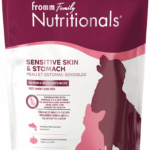
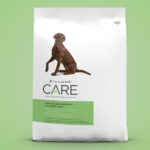
Foods that list Hydrolyzed Salmon
3 foods in our catalog list it, highest on the label first.
Sources
What we read
Checked October 1, 2026.
- 1 Nutritional and Sensory Properties of Protein Hydrolysates Based on Salmon (Salmo salar), Mackerel (Scomber scombrus), and Herring (Clupea harengus) Heads and Backbones
- 2 Raw mechanically separated chicken meat and salmon protein hydrolysate as protein sources in extruded dog food: effect on protein and amino acid digestibility
- 3 297 Digestibility, blood parameters, and skin barrier function of dogs fed hydrolyzed salmon proteins
- 4 Evaluation of hydrolyzed salmon and hydrolyzed poultry feather diets in restrictive diet trials for diagnosis of food allergies in pruritic dogs
- 5 A systematic review of the evidence of reduced allergenicity and clinical benefit of food hydrolysates in dogs with cutaneous adverse food reactions
- 6 Critically appraised topic on adverse food reactions of companion animals (2): common food allergen sources in dogs and cats
- 7 A comprehensive review of fish protein hydrolysates targeting pet food formulations
- 8 Determination of digestible indispensable amino acid score for salmon hydrolysate proteins
- 9 Protein hydrolysate and oil from fish waste reveal potential as dog food ingredients
- 10 Reading Labels