
Ingredient file // Grain
Brown Rice Flour
Useful starch with modest whole grain perks
Brown rice flour is brown rice ground fine after its inedible hull is removed. It supplies cooked starch for energy and helps thicken food. Its bran adds some fiber, but dog studies have not shown a special whole grain health benefit.
Role in the food Does a job- What it is
- Ground brown rice with the bran retained and the inedible hull removed.
- Made from
- Dehulled brown rice kernels
- Main job
- Starch for energy and texture
- Typical amount
- Not published
- Watch for
- Rice-heavy recipes and arsenic exposure
- Not the same as
- White rice flour
Straight answer
Is Brown Rice Flour safe for dogs?
Read the whole recipe before judging flour
On a wet food label, compare brown rice flour with the meat and broth around it. Ingredients are ranked by weight, so the list does not reveal flour's share of calories. Flour near the front signals substantial starch. Check the complete and balanced statement and guaranteed analysis, then judge the whole food.
- Why it is in the food
- Starch for energy and texture
- Watch for
- Rice-heavy diets and arsenic
- How common
- Listed by 12 of the 3,204 foods we track
Our read // In our catalog
In 1 of every 267 foods we track
Share of foods that list it
<1%
12 of the 3,204 foods with an ingredient list on file, from 5 brands. 11 wet dog food, 1 dry dog food.
Each square is 1% of the catalog
Where it sits on the label
Median position 5. In the top five of 7 foods, so it is usually a main ingredient.
Above the salt
Almost always listed before the salt, so there is more of it than a pinch.
Price per lb
Median of the cheapest bag price across 4 priced foods, 19% below the catalog. The price is the food's, not the ingredient's.
Who leans on it
58%
of the foods that list it are from NutriSource. 5 brands use it in total.
What it is
How it is made
Rice mills separate intact kernels for table rice and sell broken kernels for other uses, including flour. To make brown rice flour, a mill removes the hull, keeps the bran and grinds the grain.4,6,7
- 01 // Source Rough rice Harvested rice arrives with an outer hull that people and dogs do not eat.
- 02 // Process Hull removed Removing the hull leaves brown rice with its bran layer still attached.
- 03 // Process Grain ground The brown kernels are ground and screened into a fine, even powder.
- 04 // Output Brown rice flour The dry flour retains the bran and germ and is ready to blend into pet food.
What is in it
Composition, dry matter
66-80
% starch
Measured across ground brown rice samples. Starch is the flour's main contribution to a recipe, while its protein contribution is small.
Why it is in the bag
Energy and texture, in amounts labels do not show
- Main nutrition
- Supporting nutrient
- Does a job
- Mostly filler
Makers add it as a cooked starch and a thickener. Dogs digested a brown rice powder diet well, and in lab tests heated brown rice flour formed a gel, which gives wet food body. Labels rank ingredients by weight, but makers do not publish amounts, so how much energy it adds to a given food is unknown. It supplies little protein. It is not filler, because it does real work.1,4,5,9
-
01
Supplies digestible energy
Cooking makes its starch available to dogs. A controlled feeding study found high digestibility in a diet made with brown rice powder.1,5
-
02
Thickens the food
Ground rice swells and forms a gel when heated with water. That gives a manufacturer a way to add body to a wet recipe.4
-
03
Uses a milling market
Rice mills also grind broken kernels into flour, giving those lower-priced grains a buyer. A label does not reveal whether this flour came from whole or broken kernels.6,7
How much One dog trial used 37.57% brown rice powder in its prepared diet; that is a test amount, not a typical commercial amount.1
Our read // The claims
What the evidence supports
Strong: controlled studies in dogs agree. Some: small or mixed dog data. Thin: mechanism or lab work only. None: nothing, or the evidence points the other way.
-
Brands say
Brown rice flour gives dogs digestible energy
Evidence
- Strong
- Some
- Thin
- None
In an 8-dog study, the brown rice powder diet had 91.61% dry matter digestibility. A separate 6-dog trial found no pronounced digestibility loss with brown rice. Those results support usable energy, not a special health effect.1,2
-
Brands say
Brown rice flour thickens wet food
Evidence
- Strong
- Some
- Thin
- None
In a lab, brown rice flours formed gels at concentrations of 4 to 8% in heated water. That supports a thickening role, although the test did not measure texture in finished wet dog food.4
-
Brands say
Brown rice flour is healthier than white rice
Outruns the evidence
Evidence
- Strong
- Some
- Thin
- None
Three brown rice flours had 2.06 to 2.85% crude fiber, compared with 0.49% in the tested white flour. The difference is real, but no dog trial links this flour to better long-term health.4
-
Owners say
Brown rice is easier to digest than white rice
Outruns the evidence
Evidence
- Strong
- Some
- Thin
- None
In 8 beagles, diets made with brown rice powder had 91.61% dry matter digestibility versus 92.45% with white rice powder. The study shows no brown rice advantage and did not test dogs with upset stomachs.1
-
Critics say
Brown rice flour is just filler
Outruns the evidence
Evidence
- Strong
- Some
- Thin
- None
Ground brown rice contained 66 to 80% starch on a dry basis, and an 8-dog feeding study found high digestibility for its diet. Calling it filler ignores its energy and texture roles, though it supplies little protein.1,4,5
Straight answers
What owners ask
-
Q01
Is it just filler?
NoIt supplies starch that dogs digest for energy, and heated flour adds body to food. It is there for a job. It is not a meaningful substitute for meat protein.1,4,5
-
Q02
Does brown mean more fiber?
A littleThe bran stays in brown rice flour. Tested brown flours had more crude fiber than a tested white rice flour, but starch still made up most of the brown grain.4,5
-
Q03
Should I worry about arsenic?
Consider the recipeFDA surveys found more inorganic arsenic in brown rice than white rice. A small dog study found higher hair arsenic with rice-heavy kibble, but did not find toxicity. A label cannot tell you a batch's arsenic level.3,8,9
Who uses it
Brands, best sellers and the company it keeps
Top brands, by foods that list it
Foods that list it / all the brand's recipes we track.
Usually listed with, share of the foods that list it
- Dried Egg Product 58%
- Chicken 50%
- Chicken Broth 50%
- Barley 50%
- Coconut Glycerin 50%
- Natural Flavor 42%
- Turkey 33%
- Carrots 33%
- Chicken Liver 33%
- Turkey Broth 25%
- Beef 25%
- Salmon Oil 25%
On the shelf
Foods that list Brown Rice Flour
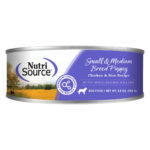
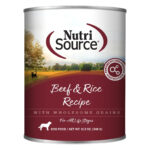
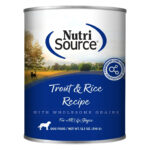
12 foods in our catalog list it, highest on the label first.
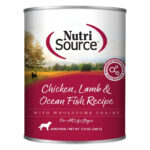 NutriSourceNutriSource Chicken, Lamb & Ocean Fish Wet Dog Food
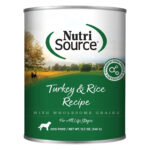 NutriSourceNutriSource Turkey & Rice Wet Dog Food
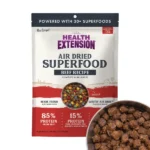 Health ExtensionHealth Extension Gently Air Dried Superfoods Beef Recipe Dry Dog Food
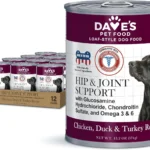 Dave's Pet FoodDave’s Pet Food Restricted Diet Dave’s Restricted Hip & Joint Support, Chicken, Duck, & Turkey Recipe Wet Dog Food
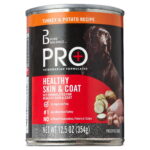 Pure BalancePure Balance Pro+ Turkey & Potato Recipe Can Wet Dog Food
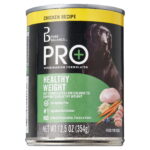 Pure BalancePure Balance Pro+ Chicken Recipe for Healthy Weight Can Wet Dog Food
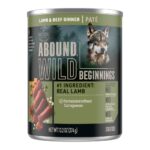 AboundAbound Wild Beginnings Lamb & Beef Dinner Pate Wet Dog Food
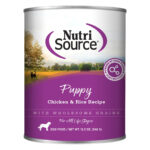

Sources
What we read
Checked October 1, 2026.
- 1 Nutritional value of common carbohydrate sources used in pet foods
- 2 Nutrient Digestibility, Palatability and Stool Quality of Canine Food Including Brown Rice
- 3 Hair arsenic level in rice-based diet-fed Staffordshire bull terriers
- 4 Chemical, physical, and functional properties of Thai indigenous brown rice flours
- 5 Understanding starch digestibility of rice: a study in brown rice
- 6 Rice Sector at a Glance
- 7 Rice Physiology, Products, and Critical Steps Associated with Postharvest Operations in Southern Florida
- 8 Arsenic in Rice and Rice Products Risk Assessment Report
- 9 Reading Labels