
Ingredient file // Flavor
Chicken And Beef Broth
Flavored water that lets a wet food stay wet
Chicken and beef broth is the water that meat and bones were cooked in, and on a label it mostly does the job water would. It adds moisture, some flavor and a little protein, and it is not a joint supplement.
Role in the food Does a job- What it is
- The liquid left after chicken and beef bones, parts or meat are cooked in water.
- Made from
- Water plus chicken and beef bones and meat
- Main job
- Moisture and flavor in wet food
- Typical amount
- Not published
- Watch for
- Dogs allergic to beef or chicken
- Not the same as
- The meat itself, or bone broth toppers
Straight answer
Is Chicken And Beef Broth safe for dogs?
Read past the broth to the meat
In a wet food, broth at the top of the list is normal: it is the liquid, and liquid weighs the most. Judge the food by the meats and organs that follow, compare foods on a dry matter basis, and ignore any collagen or hydration promise built on the broth.
- Why it is in the food
- Moisture and flavor in wet food
- How common
- Listed by 1 of the 3,204 foods we track
Our read // In our catalog
In 1 of every 3,204 foods we track
Share of foods that list it
<1%
1 of the 3,204 foods with an ingredient list on file, from 1 brand. All wet dog food.
Each square is 1% of the catalog
Where it sits on the label
Median position 2. In the top five of 1 food, so it is usually a main ingredient.
Who leans on it
100%
of the foods that list it are from Purina. 1 brand use it in total.
What it is
How it is made
Broth comes from cooking meat and bones in water. Pet food makers cook their own or buy it from suppliers as a liquid or powder, then use it as the liquid part of canned food.4,5,6
- 01 // Source Bones and meat Chicken and beef bones, parts and muscle from meat processing go into water to cook.
- 02 // Process Simmered in water Soluble protein and flavor move into the liquid. Very little calcium does, under 5% of daily needs per serving.
- 03 // Process Concentrated or not Suppliers also sell it as a liquid concentrate above 55% solids, or a powder of 90% protein on a dry basis.
- 04 // Process Filled and retorted In a canned gravy process, meat pieces go into the can first, the liquid follows, and the sealed can is steam retorted.
- 05 // Output Broth in the can The liquid around the chunks. To be called broth, a supplier notes, it cannot exceed 135 parts water to 1 part protein.
What is in it
Composition, as fed
98
% water
Retail chicken broth is 97.8% water as fed. Pet food broth must carry more protein: no more than 135 parts water per part protein.
Why it is in the bag
The liquid in the can, with some flavor
- Main nutrition
- Supporting nutrient
- Does a job
- Mostly filler
Broth is the liquid part of a wet food. It surrounds the chunks, adds meaty flavor, and looks better on a label than water does. A food that is mainly broth or gravy, and labeled that way, may go past the usual 78% moisture cap. It sits high on wet food lists because liquid weighs the most. At about 98% water and 0.64% protein as fed, it adds little nutrition. The meats listed after it supply that.1,2,4
-
01
Room for extra moisture
Pet food labels cap moisture at 78% unless the food consists mainly of stew, gravy, sauce or broth and is labeled that way. Broth lets a wet food run wetter.1
-
02
Reads better than water
A broth supplier pitches its product as a way to replace water on your label for consumer appeal. Broth sounds like food in a spot where water would sit.4
-
03
Flavor and a little protein
Cooking pulls soluble protein and flavor out of meat and bone. Retail broth holds about 0.6 to 1.1% protein as fed, enough for taste, not for nutrition.2,3,4
How much No source publishes a broth rate; one canned meat in gravy patent preferred 50 to 60% meat pieces, leaving the liquid near 40 to 50%.5
Our read // The claims
What the evidence supports
Strong: controlled studies in dogs agree. Some: small or mixed dog data. Thin: mechanism or lab work only. None: nothing, or the evidence points the other way.
-
Critics say
Broth is just water with a better name
Outruns the evidence
Evidence
- Strong
- Some
- Thin
- None
Retail chicken broth is 97.8% water and 0.64% protein as fed, and one supplier pitches broth as a water replacement for label appeal. Calling it just water goes too far: it carries flavor and soluble protein, and pet food broth analyzes are not published.2,4
-
Brands say
Broth keeps dogs hydrated
Outruns the evidence
Evidence
- Strong
- Some
- Thin
- None
No study has tested broth. The closest is a 10-dog crossover, funded by a fresh food brand, where a 71% moisture diet added 88 g of water a day over kibble. Even kibble-fed dogs met 102% of their water need.8
-
Brands say
Broth adds flavor dogs prefer
Outruns the evidence
Evidence
- Strong
- Some
- Thin
- None
Suppliers sell broth to add palatability, and cooking does move soluble protein into the liquid. We found no published dog preference test of broth against plain water, so the preference claim rests on mechanism alone.2,4
-
Critics say
Bone broth is contaminated with lead
Outruns the evidence
Evidence
- Strong
- Some
- Thin
- None
A small blinded study found chicken bone broth at 7.01 micrograms of lead per liter against 0.89 for tap water. A 2017 analysis put commercial broths at a few micrograms per serving and called the risk minimal.6,7
Straight answers
What owners ask
-
Q01
Is it just filler?
Mostly waterBroth is about 98% water, so it brings almost no calories or protein. It has a job, carrying the chunks and adding flavor, but the nutrition comes from the meats listed after it.2,5
-
Q02
Does it add calcium from the bones?
Very littleHome-made and commercial bone broths carried calcium and magnesium at low tenths of a milligram per serving, under 5% of daily recommended levels. Broth is not a calcium source worth counting.6
-
Q03
Is broth better than water?
SlightlyIt adds flavor and a little protein, about 1 g per 100 g in retail beef broth. Nutritionally the two are close. The bigger difference is how the label reads.3,4
Who uses it
Brands, best sellers and the company it keeps
Top brands, by foods that list it
Foods that list it / all the brand's recipes we track.
Usually listed with, share of the foods that list it
- Chicken 100%
- Liver 100%
- Meat By-Products 100%
- Beef 100%
- Tomatoes 100%
- Carrots 100%
- Spinach 100%
- Minerals 100%
- Potassium Chloride 100%
- Zinc Sulfate 100%
- Ferrous Sulfate 100%
- Copper Sulfate 100%
On the shelf
Foods that list Chicken And Beef Broth
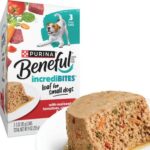
1 food in our catalog lists it, highest on the label first.
Sources
What we read
Checked October 1, 2026.
- 1 4 Tex. Admin. Code § 63.5 - Ingredients
- 2 Soup, chicken broth, ready-to-serve (FDC ID 174536)
- 3 Soup, beef broth or bouillon canned, ready-to-serve (FDC ID 171538)
- 4 Nuvin Chicken Broth
- 5 Process for making a canned meat with gravy pet food (US4791002A)
- 6 Essential and toxic metals in animal bone broths
- 7 The risk of lead contamination in bone broth diets
- 8 Feeding fresh food and providing water ad libitum is clinically proven to exceed calculated daily water requirements and impact urine relative supersaturation in dogs
- 9 Critically appraised topic on adverse food reactions of companion animals (2): common food allergen sources in dogs and cats