
Ingredient file // Animal protein
Chicken Breast
Real, lean chicken that the label oversells
Chicken breast is the lean white muscle of the bird, added to kibble fresh and weighed with its water. It brings good protein and flavor, but most of its weight leaves in the cooker, so first place on the label overstates it.
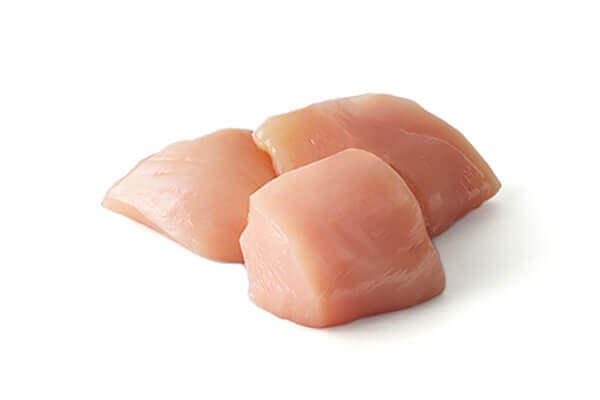
- What it is
- The lean breast muscle of a meat chicken, deboned and skinned, added to kibble fresh and weighed wet.
- Made from
- Breast fillets from broiler chickens
- Main job
- Lean protein and label appeal
- Typical amount
- Not published
- Watch for
- Listed first, yet about three-quarters water
- Not the same as
- Chicken meal
Straight answer
Is Chicken Breast safe for dogs?
Read past it to the next few lines
Chicken breast first means fresh meat went in, weighed wet. Chicken meal listed second or third can carry more chicken than the breast above it, so read the next few lines. Judge the food by its dry matter protein and fat, and treat the breast as a flavor and label choice.
- Why it is in the food
- Lean protein and label appeal
- How common
- Listed by 3 of the 3,204 foods we track
Our read // In our catalog
In 1 of every 1,068 foods we track
Share of foods that list it
<1%
3 of the 3,204 foods with an ingredient list on file, from 3 brands. 1 freeze-dried dog food, 1 wet dog food, 1 dry dog food.
Each square is 1% of the catalog
Where it sits on the label
Median position 1. In the top five of 3 foods, so it is usually a main ingredient.
Above the salt
Almost always listed before the salt, so there is more of it than a pinch.
Who leans on it
33%
of the foods that list it are from Annamaet. 3 brands use it in total.
What it is
How it is made
Breast fillets come from broiler chickens raised mainly for the human meat case. Fresh meat goes into pet food by its wet weight, about 70% water, which is why it ranks high on the list.1,5
- 01 // Source Broiler chickens Fast-growing meat birds. In one study, Ross broilers were slaughtered at 28 to 34 days.
- 02 // Process Chilled and deboned In that study, carcasses were chilled at 4°C and the breast was deboned and skinned within 14 hours of slaughter.
- 03 // Output Fresh breast meat Deboned breast is 75 to 78% water and is weighed wet into the recipe. Most of that water leaves during cooking.
What is in it
Composition, as fed
75-78
% water
Raw breast is about three-quarters water. That water counts toward its place on the label, then leaves during cooking and drying.
Why it is in the bag
What the manufacturer gets
-
01
Earns the top spot
Ingredients are ranked by weight, water included. Breast is about three-quarters water, so a modest amount can come first. Tufts nutritionists note brands may use just enough fresh meat to list it first.1,5,7
-
02
Improves taste
In a 20-dog preference test, dogs chose a kibble made with 16% fresh chicken slurry by 2 to 1. Protein digestibility rose a little, from 82.6% to 84.6%.4
-
03
Protein without skin fat
Raw breast is 23 to 24% protein and under 0.2% fat. Generic chicken can include skin and bone, so breast adds animal protein with less fat.1,6
How much No brand publishes how much breast goes in. A 9-dog trial fed fresh chicken slurry at 8 and 16% of a kibble, with little effect on stool.4
Our read // The claims
What the evidence supports
Strong: controlled studies in dogs agree. Some: small or mixed dog data. Thin: mechanism or lab work only. None: nothing, or the evidence points the other way.
-
Brands say
Chicken breast is a lean, complete protein
Evidence
- Strong
- Some
- Thin
- None
Raw breast tested at 23 to 24% protein and under 0.2% fat, so nearly all of its dry weight is protein. In a rooster assay, every essential amino acid in steamed chicken was more than 88% digestible.1,3
-
Owners say
Chicken is a common allergen for dogs
Evidence
- Strong
- Some
- Thin
- None
Chicken was the trigger in 45 of 297 dogs with proven food reactions, ranking behind beef and dairy. It is a real and frequent allergen, though not the most frequent one.8
-
Brands say
Lean breast meat makes a food good for weight loss
Outruns the evidence
Evidence
- Strong
- Some
- Thin
- None
A 6-month, 30-dog Purina trial found a diet enriched with protein, fish oil and soy germ meal prevented lean mass loss during weight loss. The credit goes to the whole diet. One lean ingredient, mostly water, does not make a food lean.1,9
-
Owners say
Chicken breast first means the food is mostly chicken
Outruns the evidence
Evidence
- Strong
- Some
- Thin
- None
Labels rank ingredients by weight, water included. Breast is 75 to 78% water, so it can come first. Tufts nutritionists note a food with chicken first may hold less actual chicken than one with chicken meal second or third.1,5,7
Straight answers
What owners ask
-
Q01
Is chicken breast better than chicken meal?
Not clearlyFresh chicken keeps its amino acids a little better than rendered meal does, but pound for pound, meal carries far more protein. Tufts nutritionists point out that an ingredient list cannot show quality.3,5
-
Q02
Why is chicken meal listed right after it?
To carry proteinBreast is weighed wet, so it ranks high while adding little dry matter. Meal is under 10% moisture, so a food that lists meal second can get more chicken from the meal than from the breast.5
-
Q03
Is breast the same as plain chicken?
No, narrowerOn a pet food label, chicken means flesh and skin, with or without bone, often from backs and necks. Breast is one lean muscle, so it brings less fat and no bone calcium.1,6
Who uses it
Brands, best sellers and the company it keeps
Top brands, by foods that list it
Foods that list it / all the brand's recipes we track.
Usually listed with, share of the foods that list it
- Sweet Potatoes 67%
- Chicken 33%
- Chicken Ground with Bone 33%
- Chicken Heart 33%
- Chicken Liver 33%
- Carrots 33%
- Chicken Eggs 33%
- Flaxseed 33%
- Inulin 33%
- White Rice 33%
- Chicken Broth 33%
- Pumpkin 33%
On the shelf
Foods that list Chicken Breast
3 foods in our catalog list it, highest on the label first.
Sources
What we read
Checked October 1, 2026.
- 1 Carcass and retail meat cuts quality properties of broiler chicken meat based on the slaughter age
- 2 Meat quality traits and proteome profile of woody broiler breast (pectoralis major) meat
- 3 Chemical composition, true nutrient digestibility, and true metabolizable energy of chicken-based ingredients differing by processing method using the precision-fed cecectomized rooster assay
- 4 Effects of chicken slurry inclusion on apparent total tract macronutrient digestibility, palatability, and fecal characteristics, microbiota, and metabolites of healthy adult dogs
- 5 Why you shouldn't judge a pet food by its ingredient list
- 6 What's in the Ingredients List?
- 7 Animal Food Labeling and Pet Food Claims
- 8 Critically appraised topic on adverse food reactions of companion animals (2): common food allergen sources in dogs and cats
- 9 Effects of a therapeutic weight loss diet on weight loss and metabolic health in overweight and obese dogs
- 10 Get the Facts! Raw Pet Food Diets can be Dangerous to You and Your Pet