
Ingredient file // Grain
Malted Barley Flour
Malt flavor and starch, without a health bonus
Malted barley flour is sprouted, dried barley ground into flour. It adds grain starch and a malty flavor to dog food. A short company taste test supports the flavor use, but claims about better digestion or gut health go beyond the evidence.
- What it is
- Barley kernels that are sprouted, dried and milled into flour instead of having their sugars extracted.
- Made from
- Malted barley grain
- Main job
- Flavor and grain starch
- Typical amount
- Not published
- Watch for
- Diagnosed barley or gluten sensitivity
- Not the same as
- Barley malt syrup
Straight answer
Is Malted Barley Flour safe for dogs?
Read its position, then judge the recipe
Malted barley flour near the end of a list is likely doing a small flavor job. Near the top, count it as a meaningful source of grain starch. Check the food's nutritional adequacy statement and the ingredients around it. Avoid it if your dog has a diagnosed barley or gluten sensitivity.
- Why it is in the food
- Flavor and grain starch
- How common
- Listed by 6 of the 3,204 foods we track
Our read // In our catalog
In 1 of every 534 foods we track
Share of foods that list it
<1%
6 of the 3,204 foods with an ingredient list on file, from 3 brands. 5 dry dog food, 1 wet dog food.
Each square is 1% of the catalog
Where it sits on the label
Median position 16.5. In the top five of 0 foods, so it is usually a minor ingredient.
Above the salt
Usually listed after the salt, which caps it at roughly 1% of the recipe in 83% of foods.
Price per lb
Median of the cheapest bag price across 3 priced foods, 66% below the catalog. The price is the food's, not the ingredient's.
Who leans on it
50%
of the foods that list it are from Rachael Ray Nutrish. 3 brands use it in total.
What it is
How it is made
The malting trade sprouts barley for brewing and food ingredients. Some dried malt is milled into flour instead of having its sugars extracted. The flour is made from grain, not spent brewery residue.2,7
- 01 // Source Barley kernels Malting starts with barley grain selected for germination, including conventional malting barley or hull-less varieties.
- 02 // Process Soaked and sprouted Water starts germination, and the growing grain develops enzymes that act on its stored starch.
- 03 // Process Kilned Drying stops germination and develops malt flavor; hotter treatment reduces the activity of the grain's enzymes.
- 04 // Process Milled and sifted Dried malt is ground, then sifted to separate flour from coarser bran.
- 05 // Output Malted barley flour The dry, milled grain goes into food production or onto finished kibble as a flavor coating.
What is in it
Composition, dry matter
70-73
% starch
Starch in flour fractions milled from one hull-less barley malt. It shows a carbohydrate role, but is not a specification for every supplier.
Why it is in the bag
What the manufacturer gets
-
01
Adds malt flavor
A company dusted finished kibble with malted barley flour. Dogs preferred several coated versions in short taste tests, giving manufacturers a reason to use it near the end of a recipe.7
-
02
Supplies grain starch
The tested flour fractions were mostly starch. Added to a recipe, that starch contributes carbohydrate, although the ingredient's place on the label cannot reveal its exact share of the finished food.2,5
-
03
Avoids syrup extraction
Hull-less barley malt mills directly into flour, skipping the extraction and evaporation needed for malt syrup. That saves processing steps, though the research does not report a pet food price.2
How much A company patent tested malted barley flour coatings at 0.5 to 2% of kibble; that is not a published industrywide usual amount.7
Our read // The claims
What the evidence supports
Strong: controlled studies in dogs agree. Some: small or mixed dog data. Thin: mechanism or lab work only. None: nothing, or the evidence points the other way.
-
Brands say
Malt flour adds starch to dog food
Evidence
- Strong
- Some
- Thin
- None
Flour fractions from one malted barley variety measured 69.7 to 72.5% starch on a dry basis. That supports its carbohydrate role. The figures do not reveal how much malt flour a finished dog food contains.2
-
Brands say
Malt makes kibble tastier to dogs
Evidence
- Strong
- Some
- Thin
- None
A company patent reports that a 30-dog panel preferred kibble coated with malted barley flour in a 2-day test. The result supports a taste effect in those recipes, but it is short and company-reported.7
-
Brands say
Malting enzymes make dog food easier to digest
Outruns the evidence
Evidence
- Strong
- Some
- Thin
- None
Malted barley develops starch-breaking enzymes, but kilning reduces their activity. In a separate experiment using added heat-stable amylase, 12 dogs showed no nutrient digestibility gain. That experiment did not test malt flour.1,2
-
Brands say
Its barley fiber improves gut health
Outruns the evidence
Evidence
- Strong
- Some
- Thin
- None
A pet ingredient analysis measured 42.1% dietary fiber in one malted barley sample, not identified there as a flour. The analysis did not feed dogs. It cannot show a gut health benefit from malted barley flour.2,3
-
Critics say
Malted barley flour is just filler
Outruns the evidence
Evidence
- Strong
- Some
- Thin
- None
The tested flour fractions contained substantial starch, and dogs preferred malt-coated kibble in the company taste tests. Those are recipe uses. The ingredient alone still cannot tell an owner whether the complete food is well formulated.2,7
Straight answers
What owners ask
-
Q01
Is it just filler?
NoIt supplies starch and a malty flavor. If it appears near the end of the list, flavor is the more likely reason for adding it. Judge the food by its major ingredients and nutritional adequacy statement.2,5,7
-
Q02
Does malt mean beer?
NoMalt flour is sprouted barley that has been dried and ground. Brewing extracts sugars from malt in a later process. The flour on a dog food label is neither beer nor grain left after brewing.2
-
Q03
Will its enzymes help digestion?
No proofMalting produces enzymes, while kilning reduces their activity. A dog experiment with added heat-stable amylase found no digestibility gain, and it did not test malt flour. The flour has no demonstrated digestive benefit in dogs.1,2
-
Q04
Why does its list position matter?
It shows weightIngredients are listed from most to least by weight. Malt flour near the top is a larger part of the recipe and contributes more starch. Near the end, its likely role is flavor.2,5,7
Who uses it
Brands, best sellers and the company it keeps
Top brands, by foods that list it
Foods that list it / all the brand's recipes we track.
Amazon best sellers that list it
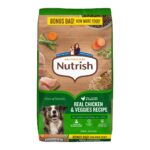
- #34 Rachael Ray Nutrish Real Chicken & Veggies Recipe Dry Dog Food
- #37 Rachael Ray Nutrish Real Beef, Pea & Brown Rice Recipe Dry Dog Food
Rank on Amazon's dog food best seller list, checked October 2026.
Usually listed with, share of the foods that list it
- Mixed Tocopherols 100%
- Soybean Meal 83%
- Brown Rice 50%
- Ground Whole Corn 50%
- Grain Sorghum 50%
- Dried Peas 50%
- Chicken Fat 50%
- Whole Grain Wheat 50%
- Canola Meal 50%
- Barley 33%
- Carrots 33%
- Dried Plain Beet Pulp 33%
On the shelf
Foods that list Malted Barley Flour
6 foods in our catalog list it, highest on the label first.
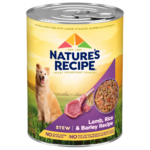 Nature's RecipeNature’s Recipe Original Stew Lamb, Rice & Barley Recipe Wet Dog Food
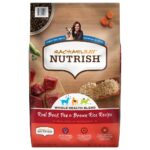 Rachael Ray NutrishRachael Ray Nutrish Real Beef, Pea & Brown Rice Recipe Dry Dog Food
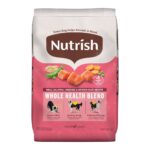 Rachael Ray NutrishRachael Ray Nutrish Real Salmon, Veggies & Brown Rice Dry Dog Food
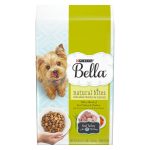 PurinaPurina Bella Natural Bites with a Blend of Real Turkey & Chicken Dry Dog Food
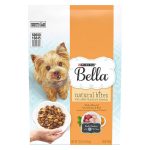 PurinaPurina Bella Natural Bites with a Blend of Real Chicken & Beef Dry Dog Food
Sources
What we read
Checked October 1, 2026.
- 1 Amylase utilization for the extrusion of dog diets
- 2 Production of Food Malt from Hull-less Barley
- 3 Compositional Analysis of Whole Grains, Processed Grains, Grain Co-Products, and Other Carbohydrate Sources with Applicability to Pet Animal Nutrition
- 4 Chemical Contaminants
- 5 What's in the Ingredients List?
- 6 Congenital and Inherited Anomalies of the Small and Large Intestines in Animals
- 7 Pet food palatant and use thereof
- 8 Designer Diets: What's in My Dog's Food?