
Ingredient file // Animal protein
Poultry Liver
Real organ meat, rich in vitamin A, used sparingly
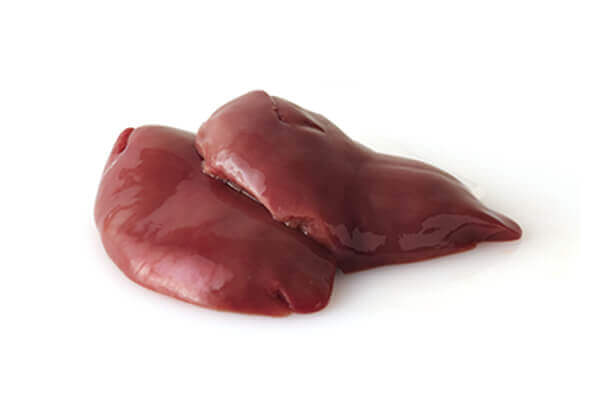
Poultry liver is the liver of chickens, turkeys or other birds, taken from the organ package at slaughter. In wet food it adds digestible protein and a large dose of vitamin A, iron and B12, which is why it belongs in small amounts.
- What it is
- Raw liver from farmed birds, species not named, harvested at slaughter and used fresh or frozen.
- Made from
- Livers from the poultry organ package
- Main job
- Vitamins and protein, plus flavor
- Typical amount
- Not published; one dog trial fed liver powder at 26%
- Watch for
- Copper load for dogs with copper liver disease
- Not the same as
- Poultry liver meal or digest
Straight answer
Is Poultry Liver safe for dogs?
Count it as a vitamin and protein ingredient
Poultry liver belongs mid-list or lower, behind a named muscle meat, where it adds protein and vitamins. Near the top of a wet food it means a liver-heavy recipe, which suits most dogs but not copper-sensitive ones. Do not pile liver treats on top.
- Why it is in the food
- Vitamins and protein, plus flavor
- How common
- Listed by 3 of the 3,204 foods we track
Our read // In our catalog
In 1 of every 1,068 foods we track
Share of foods that list it
<1%
3 of the 3,204 foods with an ingredient list on file, from 2 brands. All wet dog food.
Each square is 1% of the catalog
Where it sits on the label
Median position 4. In the top five of 3 foods, so it is usually a main ingredient.
Above the salt
Almost always listed before the salt, so there is more of it than a pinch.
Who leans on it
67%
of the foods that list it are from Dave's Pet Food. 2 brands use it in total.
What it is
How it is made
Poultry liver is a co-product of bird slaughter. Every carcass yields one, and processing plants pull it from the organ package by machine, chill it, and sell it as human food or pet food raw material.1,9,10,11
- 01 // Source Organ package After evisceration, the heart, liver and gizzard come out of the bird together as the giblet package.
- 02 // Process Liver harvested Machines pull the liver from the viscera pack, replacing hand work that was slow, inconsistent and costly.
- 03 // Process Gall bladder removed The gall bladder is stretched away from the liver and cut off mechanically.
- 04 // Process Chilled Livers are chilled in water or air at the poultry plant so they keep as a saleable product.
- 05 // Output Raw liver Raw liver, about 76% water, broken up and ground into the meat mix at the wet food plant.
What is in it
Composition, dry matter
72
% protein
Protein in raw chicken liver once its 76% water is removed, calculated from USDA data. As it goes into the can, it is about 17% protein.
Why it is in the bag
What the manufacturer gets
-
01
Vitamins from food
100 g of raw chicken liver carries 3,296 µg vitamin A, 16.6 µg B12 and 9 mg iron, so a small amount moves a recipe toward its targets.1
-
02
Digestible protein
At about 72% protein on a dry basis, it is a protein source. A hydrolyzed liver powder gave higher protein digestibility than poultry by-product meal in a 12-dog trial, but fat and carb digestibility fell.1,4
-
03
Organ flavor
Liver gives wet food a meaty organ taste. Hydrolyzed liver raised palatability in cats, but in a 22-dog two-bowl test against a poultry by-product and meat-and-bone-meal control diet, dogs showed no preference.3,12
-
04
Supply tied to poultry
Every bird processed yields a liver, harvested by machine from the organ package, so supply tracks the size of the poultry industry.10,11
How much No source publishes typical amounts in wet food; one dog trial used hydrolyzed liver powder as the only animal protein at up to 26%.3
Our read // The claims
What the evidence supports
Strong: controlled studies in dogs agree. Some: small or mixed dog data. Thin: mechanism or lab work only. None: nothing, or the evidence points the other way.
-
Brands say
Liver is rich in vitamin A, B12 and iron
Evidence
- Strong
- Some
- Thin
- None
USDA lists 3,296 µg vitamin A, 16.6 µg B12 and 9 mg iron per 100 g of raw chicken liver. It is a real source. How much it adds depends on how much the recipe uses, which labels do not show.1
-
Brands say
Liver protein is highly digestible
Evidence
- Strong
- Some
- Thin
- None
In a 12-dog trial, diets built on hydrolyzed chicken liver powder digested protein better than poultry by-product meal diets, but fat and carbohydrate digestibility fell. That was a processed powder, not the fresh liver in a can.4
-
Vets say
Too much liver gives dogs vitamin A poisoning
Outruns the evidence
Evidence
- Strong
- Some
- Thin
- None
Merck documents vitamin A toxicosis from cod liver oil and polar bear or seal liver, not poultry liver. Raw chicken liver works out to about 92,000 IU per 1,000 kcal, under the 100,000 IU a year-long 49-puppy trial found safe.1,5,6
-
Brands say
Liver makes food tastier for dogs
Outruns the evidence
Evidence
- Strong
- Some
- Thin
- None
The one dog test found no preference: 22 dogs offered two bowls ate about equally from a liver powder diet and a control diet of poultry by-product meal plus meat-and-bone meal. Cats did favor hydrolyzed liver, but cats are not dogs.3,12
-
Critics say
Organ by-products are low-quality filler
Outruns the evidence
Evidence
- Strong
- Some
- Thin
- None
AAFCO lists livers among by-products and calls such parts safe and nutritious for animals. Liver is about 72% protein on a dry basis, and liver protein digested well in a 12-dog trial.1,4,8
Straight answers
What owners ask
-
Q01
Is it just filler?
NoIt is about 72% protein on a dry basis and carries 3,296 µg vitamin A per 100 g raw. Filler adds bulk and nothing else. Liver adds protein and vitamins in a small volume.1
-
Q02
Will the vitamin A hurt my dog?
It dependsPuppies showed no harm at 100,000 IU per 1,000 kcal for a year, and pure chicken liver alone runs about 92,000. Mixed into a recipe its share drops, but the food also adds a vitamin A premix, so the total depends on the formula.1,5
-
Q03
Is the liver in wet food cooked?
Yes, fullyCans are sealed and retorted, typically at 118 to 121°C for 45 to 90 minutes, which makes the food commercially sterile. Raw liver handling risks stay at the plant.9
-
Q04
Why poultry and not chicken?
Bird unnamedThe label tells you the liver came from a bird but not which one. Chicken, turkey and duck all fit. For most dogs that does not matter. For a dog with a poultry allergy it rules the food out.
Who uses it
Brands, best sellers and the company it keeps
Top brands, by foods that list it
Foods that list it / all the brand's recipes we track.
Usually listed with, share of the foods that list it
- Turkey 67%
- Turkey Broth 67%
- Chicken Broth 67%
- Carrots 67%
- Pea Protein 67%
- Duck 67%
- Whitefish 33%
- Brown Rice 33%
- Dried Plain Beet Pulp 33%
- Powdered Cellulose 33%
- Chicken 33%
- Brown Rice Flour 33%
On the shelf
Foods that list Poultry Liver
3 foods in our catalog list it, highest on the label first.
 Nature's LogicNature’s Logic Original Canine Can: Duck & Salmon Wet Dog Food
 Dave's Pet FoodDave’s Pet Food Restricted Diet Dave’s Restricted Hip & Joint Support, Chicken, Duck, & Turkey Recipe Wet Dog Food
 Dave's Pet FoodDave’s Pet Food Restricted Diet Dave’s Restricted Weight Management, Turkey & Vegetables Recipe for Do Wet Dog Food
On labels as
Other names for this
Manufacturers do not all use the same wording. These all mean the same thing.
Sources
What we read
Checked October 1, 2026.
- 1 Chicken, liver, all classes, raw (FDC ID 171060, SR Legacy)
- 2 Liver meal, poultry
- 3 Characterisation of spray dried hydrolysed chicken liver powder: effects on palatability and digestibility when included as single source of animal protein in dog diets
- 4 Effects of hydrolyzed chicken liver on digestibility, fecal and urinary characteristics, and fecal metabolites of adult dogs
- 5 Safety evaluation of vitamin A in growing dogs
- 6 Toxicoses in Animals From Human Multivitamins and Supplements
- 7 Nutritional management of a dog with hepatic enzymopathy suspected to be secondary to copper-associated hepatitis: a case report
- 8 What's in the Ingredients List?
- 9 Pet food product and method of producing same (US7604829B2)
- 10 Method and apparatus for harvesting livers and hearts (US8172652B2)
- 11 Giblet processing
- 12 Interpretive summary: Hydrolyzed chicken liver and increasing crude protein levels on palatability, digestibility, and intestinal fermentation products of cats